
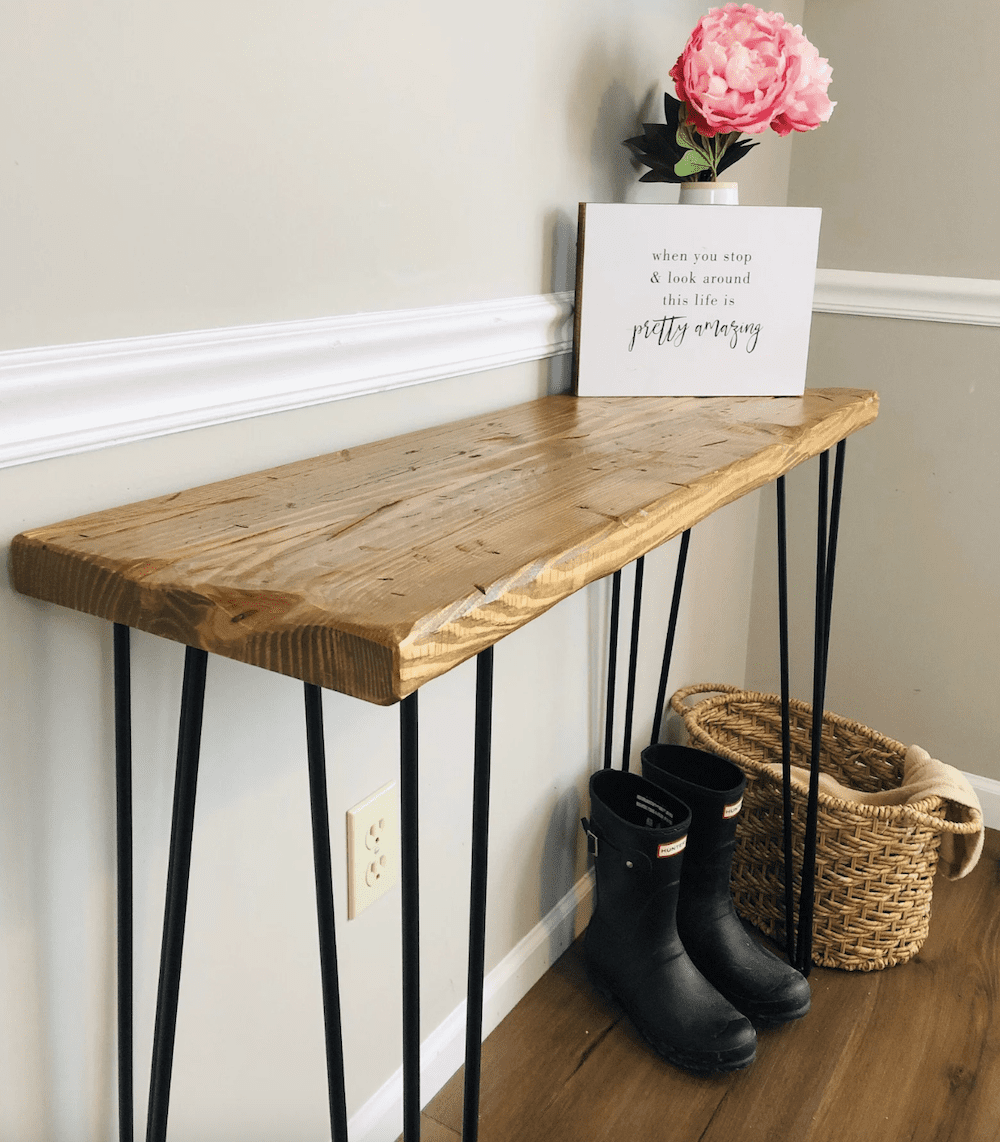
The decision to upgrade a table with metal legs is one of the best ways to completely transform a piece of furniture without starting from scratch. Instead of replacing a worn or outdated table, you can keep the tabletop and give it an entirely new identity with a modern base.
Source: FabianDesignCo
This approach fits naturally within an upcycling mindset. You extend the life of existing materials, reduce waste, and create something that feels custom rather than mass-produced. A solid wood or even laminate top can go from tired to striking with the right set of legs.
It’s also cost-effective. High-quality tabletops are often more expensive than the base, so swapping the legs gives you a high-impact upgrade without the price tag of a brand-new piece.
Choosing the Right Metal Legs for Your Table Upgrade
The base of a table plays a crucial role in both its performance and appearance. By choosing metal table legs, homeowners gain the advantage of superior strength, modern design, and long-lasting reliability.
When you upgrade a table with metal legs, the style you choose will define the final look.
Hairpin legs create a light, retro feel that works beautifully with thinner tops. Trapezoid or A-frame legs feel more architectural and are ideal for dining tables or desks. For a bold, grounded look, square or rectangular steel frames offer maximum stability.
Material matters too. Powder-coated steel resists scratches and rust, making it ideal for high-use areas like kitchens or workspaces.
A helpful rule is to match the visual weight of your tabletop with the legs. A chunky reclaimed wood slab pairs best with thicker steel frames, while slimmer tops feel more balanced with delicate hairpin legs.
How to Upgrade a Table with Metal Legs (Step-by-Step)
Upgrading a table with metal legs is approachable, even if you’re new to DIY.
Start by flipping the table upside down and removing the existing base. A drill makes this quick and clean. Once the old legs are off, inspect the underside of the tabletop. Tighten any loose joints and lightly sand if needed so the surface is smooth and even.
Next, position your new metal legs. Place them a few inches in from each edge to ensure stability, then mark your drill points. Pre-drilling is essential here. It prevents splitting and helps the screws sit flush.
Attach the legs by tightening screws gradually on each side. This keeps everything aligned and avoids uneven tension. Once secure, flip the table upright and check for wobble. Small adjustments or felt pads can make a big difference in stability.
Creative Ways to Upcycle a Table with Metal Legs
This is where things get fun. When you upgrade a table with metal legs, you’re not limited to traditional tabletops.
An old wooden door can become a stunning dining or desk surface. Sand it down, fill any hardware holes, and seal it to bring out the grain. Paired with simple black steel legs, it turns into a statement piece with history.
Vintage suitcases also make incredible side tables. Attach a set of short hairpin legs to the base, and you instantly have a functional piece with built-in storage and personality.
You can also repurpose reclaimed wood planks, suitcases, old shelving, or even salvaged countertops. The key is to look at flat surfaces differently and imagine how a new base can give them purpose again.

Small Details That Elevate Your DIY Table
When you upgrade a table with metal legs, the finishing touches are what make it feel intentional.
Adding felt pads protects your floors and stabilizes minor unevenness. Choosing hardware that matches the finish of your legs keeps the look cohesive. Sealing or oiling the tabletop enhances durability and brings out natural textures.
Even subtle adjustments, like softening sharp edges or rounding corners, can create a more refined contrast against the clean lines of metal.
Blending Materials for a Modern, Upcycled Look
One of the biggest advantages when you upgrade a table with metal legs is the ability to mix materials.
Reclaimed wood paired with steel creates a balance of warmth and structure. Glass tops feel light and contemporary, while stone or concrete surfaces lean bold and architectural.
This contrast is what gives the piece presence. The organic texture of the top meets the precision of metal, creating something that feels both grounded and elevated.
Where to Use Metal Leg Table Upgrades in Your Home
You can upgrade a table with metal legs in almost any space.
Dining tables benefit from added strength and a modern edge. Desks feel cleaner and more minimal, which can support focus and productivity. Coffee tables and console tables become standout pieces with very little effort.
Even smaller projects, like bedside tables or entryway surfaces, can shift the feel of a room when upgraded thoughtfully.
A Smarter Way to Design with Upcycling in Mind
The base of a table does more than support weight. It shapes how the piece feels and functions in your space. When you upgrade a table with metal legs, you’re choosing durability, simplicity, and a more intentional way of designing your home.
Instead of discarding what you already have, you refine it. You keep what works, improve what doesn’t, and end up with something that feels entirely your own.
That’s the real power of upcycling. Not just reuse, but transformation.
