
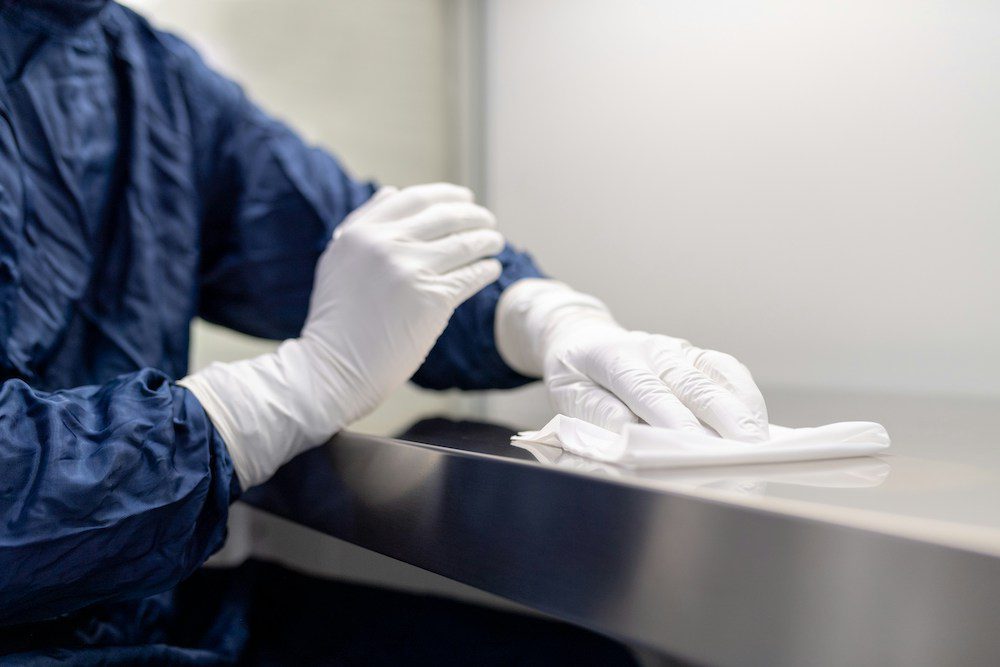
Cleanroom certification services test whether a room is controlling airborne particles and other conditions as required. A room can look spotless and still have a hidden problem: a leaking filter, weak airflow, or pressure that lets unfiltered air move the wrong way. Testing makes those invisible issues measurable, so facility teams can decide what to fix before a process or product is affected.
For facilities in central Ohio, Columbus, Ohio, Cleanroom Certification Services can coordinate testing, review deficiencies, and document corrective work. Understanding what the tests reveal helps facility managers make better decisions about both compliance and repairs.
What Cleanroom Certification Services Actually Check
A cleanroom is a controlled space used to protect work from contamination. Pharmaceutical production, medical-device manufacturing, electronics, and research are a few examples. Each room has a cleanliness classification and specific operating requirements.
A certification provider tests the room under defined conditions, compares results with the facility’s requirements, and prepares a report. That report reflects the room’s performance during the testing period. It isn’t a permanent guarantee or an approval of every process that takes place inside.
The ISO 14644-1 standard classifies cleanrooms by airborne particle concentration. The current IEST recommended practice for testing cleanrooms describes ways to characterize room performance. The tests and acceptance limits depend on the room and the facility’s agreed requirements.
The Room’s Hidden Performance Signals
Particle counters measure airborne particles at selected locations. Those readings show whether the room meets its assigned cleanliness classification. If a result falls outside the limit, the facility has a reason to investigate instead of relying on how clean the room appears.
Filter leak testing checks the HEPA filter and its seals for leaks or bypass. Airflow tests measure how air moves through the space, while pressure tests check whether air flows in the intended direction between the cleanroom and adjoining areas. Together, these checks can help point to problems with the filter, ventilation system, or room setup.
Some testing plans also include temperature, humidity, air-change, or airflow-visualization measurements. Microbial sampling may belong to a separate environmental-monitoring program, particularly in pharmaceutical or life-sciences settings. Not every certification includes every test; the scope depends on the room and the facility’s requirements.
Why Cleanroom Certification Services Create a Useful Baseline
A report should connect each result to its location, test method, operating condition, and acceptance limit. That context gives a facility’s quality team something concrete to work with when a test fails. They can investigate whether the cause was a filter, an airflow imbalance, recent maintenance, or a change in how the room is used.
In pharmaceutical facilities, FDA Current Good Manufacturing Practice regulations are part of the wider compliance program. Cleanroom test results can support that program, but certification by itself doesn’t establish that a facility or its products meet every regulatory requirement.
The same report also gives teams a baseline for future comparisons. If particle counts or pressure readings drift, they can see what changed and document the investigation, corrective action, and retest. The testing schedule depends on applicable requirements and the facility’s quality program; annual testing is not a universal rule for every cleanroom.
Use the Results to Repair Before Replacing
This is where certification connects naturally to upcycling. A failed result doesn’t automatically mean the entire cleanroom needs to be rebuilt. If a filter leaks, the team can investigate that filter and its seal. Or, if pressure is out of range, they can look at airflow and controls. Finally, if a room’s shell and compatible equipment still perform as intended, the facility may be able to keep them in service.
Reuse has firm limits in a controlled environment. Benches, carts, cabinets, and other equipment must meet the facility’s material, cleaning, and contamination-control requirements. Any change that could affect cleanliness or airflow needs review and testing. A reuse-first approach means retaining what is fit for purpose, not bringing in salvaged materials without qualification.
Upcycle That has explored a similar repair-first idea in modernizing access control without replacing every door. In a cleanroom, testing helps teams see which parts of the environment can stay, which need repair, and which must be replaced.
Keep What Works and Fix What Doesn’t
A cleanroom certificate is most useful when it guides a decision. It shows whether the room meets its requirements and gives the facility evidence to investigate problems, verify repairs, and plan future testing.
That’s the upcycling connection: preserve sound infrastructure, correct the specific failures, and keep suitable equipment working. The goal is a cleanroom that performs as required, without replacing parts that the test results show are still doing their job.
