
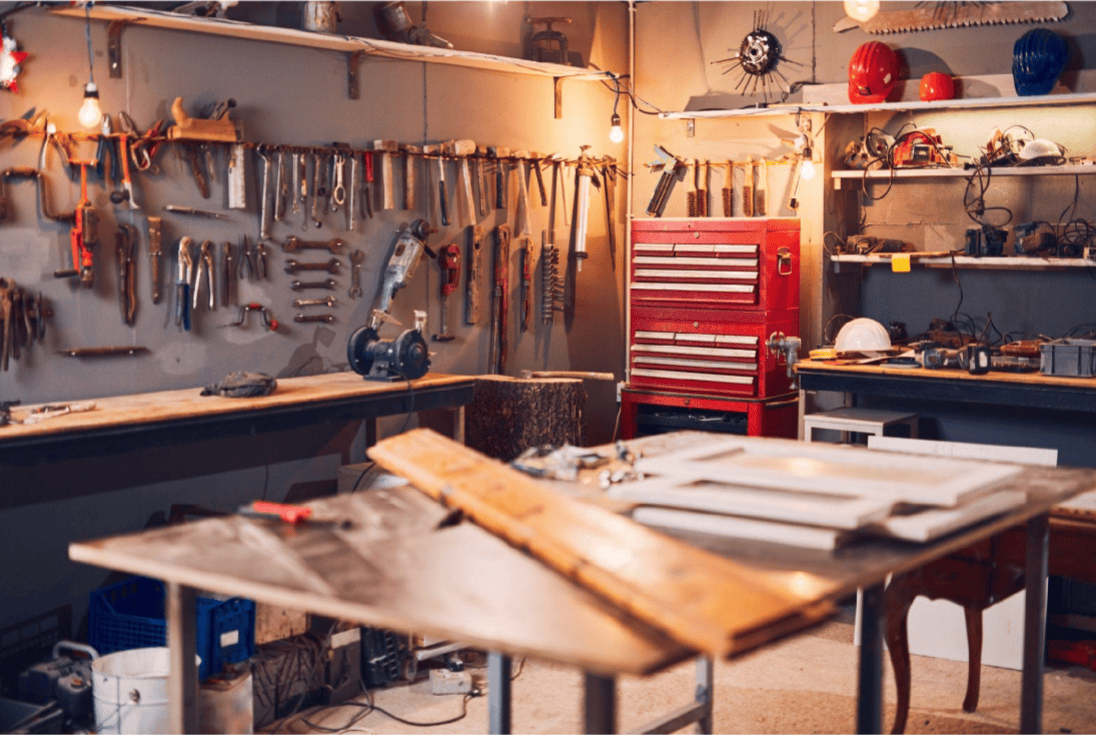
Workshop flooring has to handle the mess, movement, and machinery that come with giving old things a second life. A garage might spend most of its time sheltering a car. An upcycling workshop hosts a different routine: dragging in a rescued dresser, stripping its finish, rolling a tool chest across the room, and dropping the occasional hammer.
You don’t necessarily need to tear anything out. A sound existing slab can be the starting point for a hardworking creative space. The trick is knowing what to preserve, what to repair, and which protection will earn its keep.
Why Workshop Flooring Faces Different Demands
A parked car brings weight, tyre marks, and the occasional leak. Furniture restoration adds a different mix: repeated movement around a bench, concentrated loads beneath equipment, and spills from paint, glue, or stripping products.
Imagine restoring a secondhand dining table. First, you carry it inside and remove the legs. Then you shift the top onto supports, sand the surface, and apply a finish. One project can put the same patch of floor through several kinds of wear.
Small wheels and narrow equipment feet concentrate weight over limited areas. However, that does not mean a heavy machine will automatically crack a garage slab. The concrete’s condition, thickness, reinforcement, and support underneath all influence its capacity.
For substantial machinery, have the slab assessed before installation. A coating can protect the surface, but it cannot compensate for inadequate structural support.
For everyday upcycling, focus on the demands you actually create. A furniture-painting corner may need easy cleanup more than an industrial flooring system.
Give Your Existing Floor a Proper Assessment
Before choosing a colour or finish, clear the floor and take a close look. Peeling paint, crumbling areas, persistent dampness, and cracks all deserve attention before a new coating goes down.
Old stains matter, too. Covering contamination without suitable preparation can undermine the new finish.
In its epoxy flooring guide, Sherwin-Williams puts it plainly:
“The coating system is only as good as the integrity of the substrate.”
Here, “substrate” simply means the concrete underneath. Even an excellent coating needs a sound, properly prepared surface to bond to.
Ask an installer what preparation your floor requires. They should explain how they will assess moisture, remove contamination, and address existing damage. Depending on the product and floor condition, preparation may involve mechanical grinding or shot blasting.
If you’re considering garage epoxy floor coatings in Calgary, describe how you intend to use the space. A room for restoring chairs needs a different conversation from one housing heavy machinery or welding equipment.
Choose Workshop Flooring for the Work You Do
“Durable” sounds reassuring, but it tells you little without context. Start with a list of your regular projects and the products they involve.
For furniture restoration, that might include water-based paint, wood stain, adhesive, and occasional stripping products. Ask whether the proposed system resists those specific substances. No single coating offers unlimited chemical protection.
Also consider how you move through the room. A textured surface can improve grip, but too much texture may make cleanup harder. Look for a practical balance between secure footing and a floor you can clean without a battle.
The comparison below brings the choice back to useful questions:
| Factor | DIY Garage Coating Kit | Professionally Specified System |
|---|---|---|
| Best Fit | A manageable project on sound concrete, within the kit’s stated limits | A floor needing specialist assessment or protection for demanding use |
| Surface Preparation | Follow the kit’s requirements; preparation still takes substantial work | Preparation should reflect the slab’s condition and selected system |
| Chemical Resistance | Check the product’s resistance information | Specify resistance to the products used in your workshop |
| Impact and Wear | Performance varies by formulation and application | Select a system for expected tools, equipment, and traffic |
| Finish Options | Limited to the kit’s available finishes | May offer more choice in texture, build, and topcoat |
| Repairs and Renewal | Check compatible repair and recoating options before buying | Ask for a maintenance plan and compatible renewal options |
A professional installation is not automatically stronger in every respect. Its value lies in matching the system and preparation to the room. Likewise, a DIY kit can suit a modest workspace when the floor and application conditions meet its requirements.
Make Room for Making With Upcycled Storage
The floor is only part of a workshop that functions well. Layout determines how often you drag furniture, shuffle supplies, or step around yesterday’s project.
Create a clear route between the entrance and your bench. Keep frequently used tools within reach, and give unfinished pieces a designated waiting area. Even a small garage feels more workable when every project does not block the next one.
Build that organisation around things you already have. An old kitchen cabinet can store finishing supplies. Reused jars can sort screws and drawer pulls. A sturdy secondhand table can become a workbench if its construction suits the job.
Protect messy stations with an appropriate removable floor covering, secured against slipping or curling. Lift it regularly to clean and inspect underneath.
For the airborne side of the mess, our recent guide to handling dust and dry air in an upcycling workshop offers practical ways to protect your space and reclaimed materials.
Help Workshop Flooring Earn Its Keep
A workshop floor does not need to stay showroom-perfect. It needs to remain serviceable.
Remove grit before repeated foot traffic and wheels grind it into the finish. Wipe up spills promptly, follow the manufacturer’s cleaning instructions, and inspect busy areas for developing damage.
When wear appears, investigate the cause. A chipped coating may need a local repair; a moving concrete crack needs a different assessment. Where the existing system remains sound and compatible, recoating may extend its useful life.
That approach fits the spirit of upcycling: preserve what works, improve what needs attention, and avoid replacing materials prematurely. With the right foundation, your former parking space can become somewhere you’re excited to make a mess—and create something worth keeping.
