
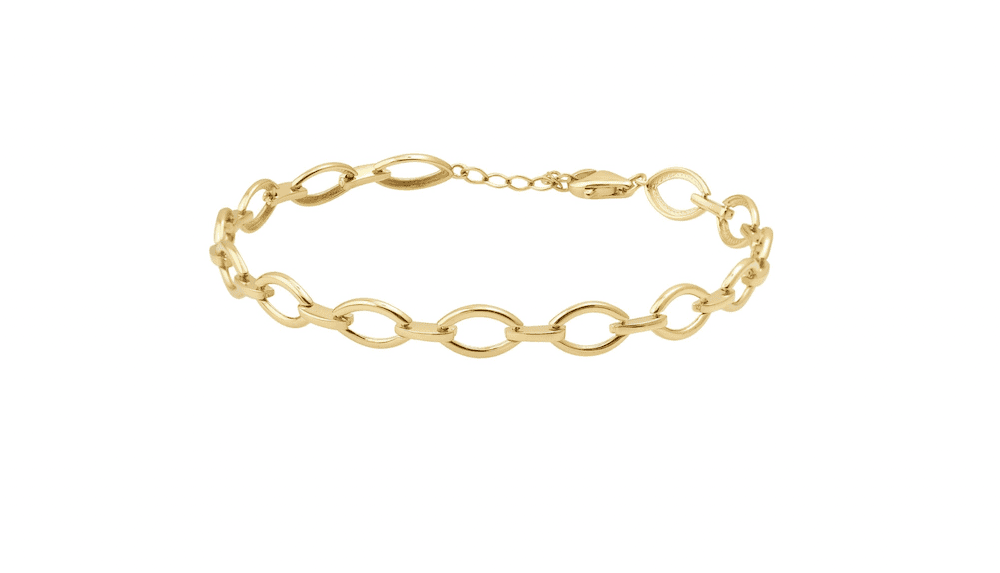
Knowing how to choose gold bracelets that can be worn for years, repaired when needed, and passed down makes it easier to buy less and enjoy what you own. One you reach for almost every day can do more for your jewelry box than a handful you rarely wear. And if you love upcycling, you already know how much potential there is in a piece someone else might set aside. A vintage chain can come back into rotation with a new clasp, and a family bracelet can be resized for the next person who wears it. That’s the appeal of a forever piece. Look for a fit you’ll enjoy, a clasp you can use one-handed, and links a jeweler can repair when the time comes.
Check the Clasp on Gold Bracelets First
When you choose gold bracelets, try opening and closing the clasp with one hand. A lobster clasp should spring shut cleanly, with a lever you can grip and a size that suits the chain. A spring-ring clasp can work well on a fine bracelet if you find it easy to fasten. On a wider bracelet with a box clasp, check that the clasp seats securely and that any separate safety catch clicks into place.
Look closely at the small ring that joins the clasp to the chain. That connection takes a tug every time the bracelet catches on a sleeve or bag strap. If you’re shopping secondhand, look for gaps, thinning, or links that have pulled out of shape. A weak spring or worn connecting ring may be a straightforward repair. Ask a jeweler for a quote before deciding whether the vintage find is still a good deal.
Get the Fit Right for Everyday Wear
Measure around your wrist where you want the bracelet to sit. For a chain, add about half an inch for a close fit or three-quarters of an inch for a little drape. Treat those numbers as starting points since chunky links take up more room on the inside. For a rigid slip-on bangle, check that it clears the widest part of your hand with your thumb tucked in.
If you can try it on, bend your wrist and see where the bracelet lands. A chain that slides halfway down your hand may spend the day catching on things. If a secondhand or inherited chain is a little long, ask a jeweler whether it can be shortened. Keep the spare links in case you want to resize it for someone else later.
Compare How Gold Bracelets Are Made
Gold plating adds a thin surface layer that can wear where a bracelet rests against a desk or rubs against another piece. Gold-filled jewelry has a thicker layer bonded to a base metal and can be a practical middle ground. When you’re shopping secondhand, inspect the underside and the edges of the links for uneven color. If you love a piece with worn plating, ask whether its base metal and condition make replating feasible.
The metal in a 14K gold link is a gold alloy throughout. Its construction still matters, though. If you’re comparing quality gold bracelets, ask whether the links are hollow or solid. Hollow links give you a bigger look with less weight, while solid links are generally less prone to denting. For a bracelet you plan to wear often, ask how easily a jeweler could replace a damaged link or clasp.
Choose a Style That Works With What You Own
Try the bracelet alongside the watch, bangle, or fine chain you already wear most. Mixing widths and textures gives each piece room to stand out. If you’re drawn to yellow, white, and rose tones, this gold color guide can help you decide which tone to build around. Move your wrist a few times to see how the pieces sit together. If a heavier bangle keeps catching a fine chain, try wearing them on opposite wrists.
Choose Gold Bracelets You Can Pass Down
A forever piece can start with a bracelet someone already wore for decades. An inherited chain might need a new clasp or a few links removed to feel right on your wrist. If a broken necklace has enough sound chain left, a jeweler may be able to turn it into a bracelet. You could add a charm from another family piece or keep the chain simple. Our guide to meaningful wedding rings has more ideas for reworking jewelry with a family history.
Whether you buy a bracelet, find it secondhand, or have one remade, check the clasp and connecting links every few months. Put it aside for repair if the clasp loses its snap or a link starts to open. If you hope to pass the piece down, tuck a note about where it came from alongside any spare links. The next person can decide how to wear it, and they’ll have a little of its story to carry with them.
