
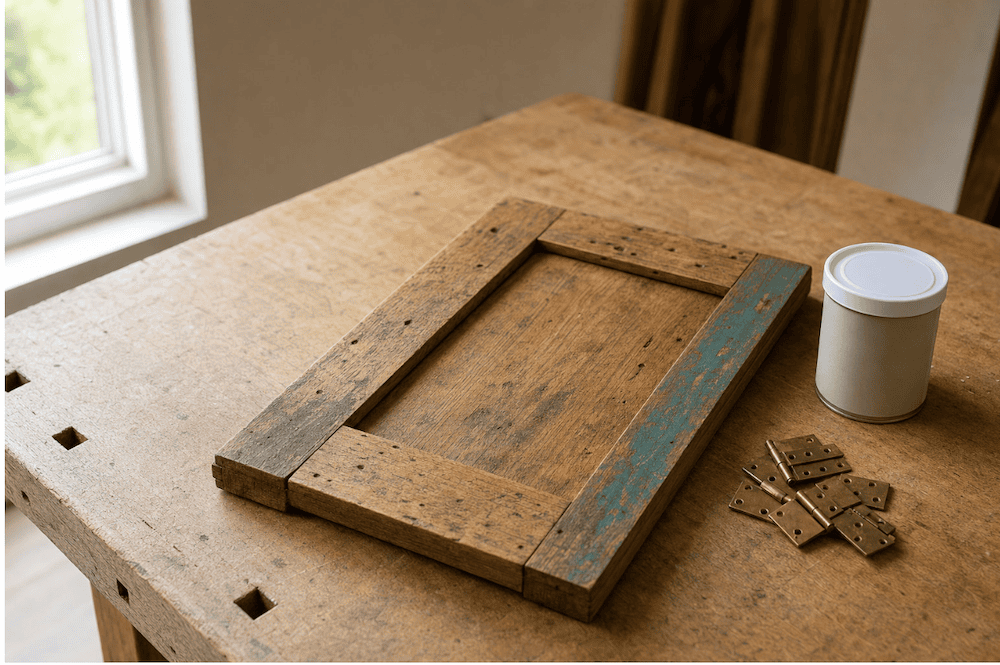
Upcycled cupboard doors offer a practical way to refresh a kitchen or storage area without sending perfectly usable materials to landfill. By working with reclaimed timber, salvaged panels, and existing hardware, homeowners can transform what they already have into cabinetry with character and a much lighter environmental footprint.
Cupboard doors are also one of the most visible parts of a kitchen. Replacing or reworking the fronts can dramatically change the look of a room without tearing out functional cabinet boxes. This makes them a natural place to apply upcycling principles during a renovation.
Finding Materials for Upcycled Cupboard Doors
Some of the best materials may already exist in your home. Old furniture, leftover floorboards, retired joinery, and timber from previous renovations can all provide useful material for new cupboard fronts.
Architectural salvage stores and reclaimed building suppliers are another good source. Even construction offcuts and outdated doors can become valuable resources when approached creatively.
Each reclaimed piece comes with its own grain, markings, and signs of age. Rather than viewing these characteristics as imperfections, consider how they can become part of the finished design.
For renovations where existing doors cannot reasonably be reused, choosing bespoke cupboard doors can still support a lower-waste approach. Custom sizing allows homeowners to retain usable cabinet boxes instead of replacing an entire kitchen simply because the fronts are damaged or outdated.
Inspect and Prepare Reclaimed Materials
Before turning salvaged materials into cupboard doors, inspect each piece carefully. Look for warping, moisture damage, rot, loose veneer, or structural weaknesses that could shorten its useful life.
Reclaimed wood may also contain old nails, screws, or other fasteners. These should be removed before cutting or sanding.
Take additional care with older painted materials. Vintage coatings may contain lead or other hazardous substances, so questionable finishes should be professionally evaluated before they’re disturbed.
Preparation doesn’t necessarily mean removing every trace of the material’s former life. Scratches, faded paint, old holes, and natural wear can often be preserved as part of the design.
Make Imperfections Part of the Design
One of the joys of upcycling is that reclaimed materials don’t need to look brand new. Their history can become the defining feature of the finished cabinetry.
Try combining woods with different grains, creating inset panels from salvaged pieces, or using contrasting materials on different cupboard fronts. Leftover timber can even be arranged into geometric or patchwork-style panels.
Existing cabinet doors can also be transformed rather than replaced. Adding reclaimed trim, refinishing damaged surfaces, inserting cane or salvaged timber panels, or simply updating the hardware can give old doors an entirely different identity.
This approach follows the same thinking behind many upcycled kitchen ideas: start by asking what can be reused, repaired, or creatively transformed before buying something new.
Build Upcycled Cupboard Doors to Last
Upcycling only delivers its full environmental benefit when the finished piece lasts. Good construction therefore matters just as much as material reuse.
Panels should be stable, square, and suitable for repeated opening and closing. Reclaimed materials with previous holes or cuts may require reinforcement, while thin decorative pieces may work better when attached to a stable backing.
Hardware deserves the same consideration. Original hinges and handles can often be cleaned, repaired, and reused. When new fittings are necessary, prioritize durable options that can be repaired or replaced individually.
In tight spaces, alternative door systems can also reduce the footprint required for cabinetry. Whatever system you choose, designing components so they can be maintained rather than discarded helps extend the life of the entire installation.
Choose Finishes That Can Be Renewed
The final finish can make upcycled cupboard doors easier to maintain for years to come. Water-based paints and lower-toxicity oils can provide protection while reducing exposure to harsh fumes.
Consider repairability as well as appearance. A surface that can be touched up or recoated allows scratches and everyday wear to be addressed without replacing the door or stripping away all of the original material.
Ultimately, sustainable cabinetry isn’t just about choosing a greener material at the beginning. It’s about keeping useful resources in circulation for as long as possible. By salvaging materials, retaining functional cabinet boxes, reusing hardware, and designing for future repairs, old cupboard doors and forgotten timber can become valuable parts of a new space rather than another renovation waste stream.
