
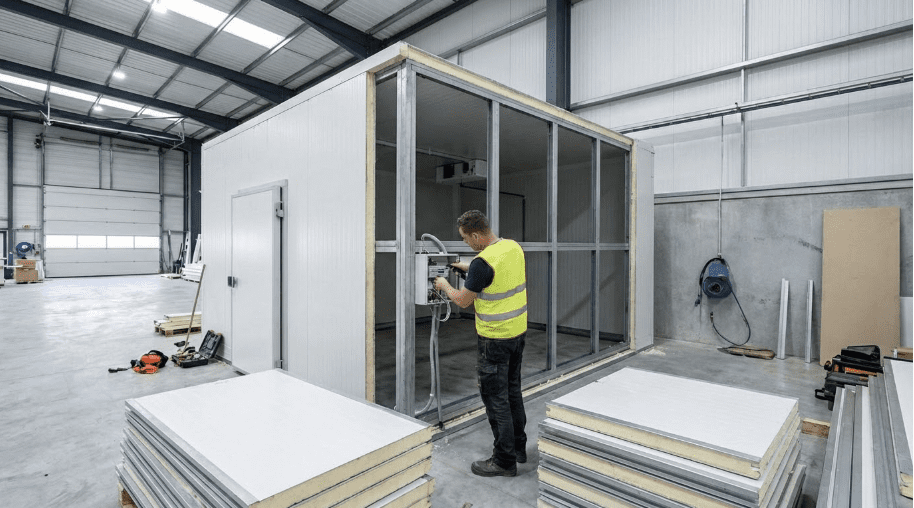
What happens to cold room panels rarely crosses your mind until you face a renovation and see them stacked in front of you. They look like oversized white walls, easy to dismiss as waste, but they play a much bigger role than that first impression suggests.
You have seen them before, even if you never knew the name. They form the walls inside restaurant walk-in fridges, grocery store backroom coolers, and large chilled storage areas at places like Costco. These panels create sealed environments that hold cold air in and keep energy use down, which is why businesses rely on them every day.
Each panel combines metal outer layers with a dense insulating foam core. That structure makes them strong, efficient, and durable. It also means you cannot treat them like a single material when they reach the end of their use. Once removed, they become a layered product that needs to be handled with intention.
What Actually Happens to Cold Room Panels After Removal
Handing old panels to a licensed contractor and watching them disappear into a lorry is where most businesses consider the matter closed. What actually happens beyond that point is a process that few people involved in cold room refits have ever had explained to them. Cold room panel disposal, when carried out correctly, shifts the focus from removal to recovery, because the goal is to separate the materials and capture as much value as possible.
Workers start by removing the outer metal layers. Steel and aluminium recycle easily when kept clean, so they move into established recycling streams without much difficulty. From there, manufacturers can reuse that metal to produce new products, which reduces the need for raw materials.
The foam core requires more careful handling. Some panels contain materials that need controlled processing to prevent environmental harm. Proper facilities break the foam down safely and redirect it into secondary uses instead of discarding it. This step turns what looks like waste into a usable input for other industries.
Where Recycling Becomes Upcycling
Not every panel needs to be broken apart. Some remain in good condition and can be reused as they are. Builders and contractors often install these panels in new cold rooms, temporary storage spaces, or smaller projects where full replacement is not necessary.
This is where recycling shifts into upcycling. Instead of reducing the materials to raw form, the panel continues its life in a new setting. This approach saves time, lowers costs, and avoids the energy required to manufacture new panels from scratch.
Even when full reuse is not an option, the materials inside still carry value. The metal returns to production, and the foam finds new applications. When handled properly, very little needs to end up as waste.
Why Upcycling Cold Room Panels Matters More Than You Think
From the outside, the process looks simple. Panels come down, get loaded into a truck, and disappear. It feels like the end of the story, but in reality, it marks the beginning of a new cycle.
Understanding what happens to cold room panels changes how you see these materials. Instead of viewing them as bulky waste, you start to recognize them as a collection of reusable resources that can move through the system more than once.
That shift in perspective matters. It helps businesses make better decisions about disposal, reduces unnecessary waste, and supports a more practical approach to using materials already in circulation. In a world where both cost and environmental impact carry weight, that kind of thinking is not just responsible, it is efficient.
