
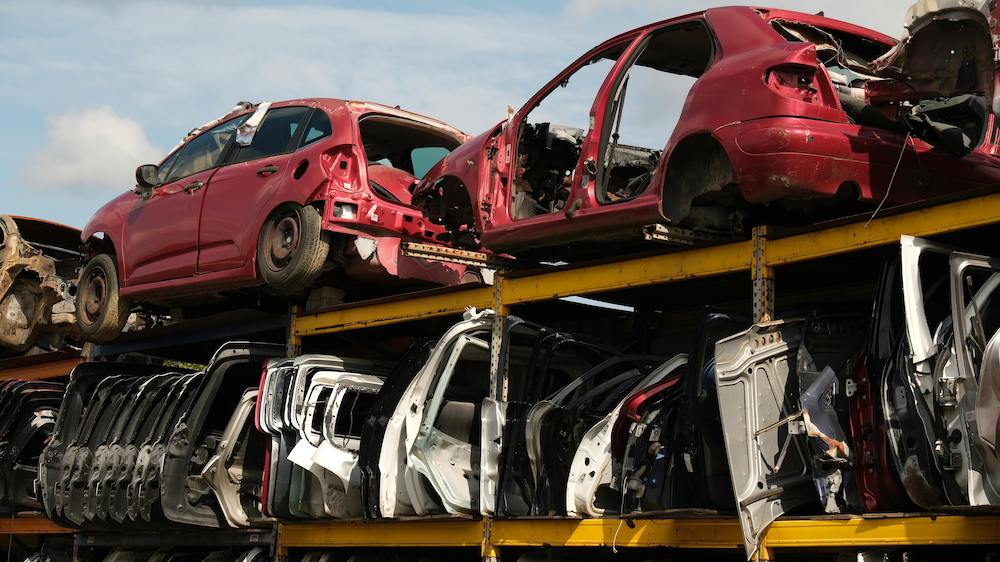
What happens to damaged cars after a crash is something most people never think about until they are suddenly dealing with it themselves.
One in four vehicles involved in serious accidents is declared a total loss, according to Auto123. That means millions of cars are taken off the road every year. But they do not simply sit in junkyards or get discarded all at once. Most of them move through a structured system designed to recover value, piece by piece, often in ways that are far more efficient than people expect.
Once you understand the process, a wrecked car starts to look less like an ending and more like a transition.
The First Stop After a Serious Crash
After an accident, your attention is on insurance, repairs, and getting your life back on track. At the same time, your vehicle is already entering its next phase. If it is declared a total loss, it is typically sent to a salvage auction, where dismantlers, recyclers, and repair shops bid on it based on what can still be recovered.
In busy cities like Denver, where multi-vehicle accidents are more common, these cases can quickly become complex. In such situations, working with the experienced Denver car accident attorneys becomes essential to ensure proper investigation, accurate fault determination, and fair compensation for your losses.
These buyers are not interested in the car as a whole. They are looking at its individual components and the value each one still holds. An engine that runs, intact body panels, working electronics, and even smaller interior elements can all be reused or resold.
At the salvage yard, each vehicle is tracked using its VIN and carefully assessed. Usable parts are removed, inspected, and catalogued before any further processing takes place. This step alone can extend the life of a vehicle’s components by years.
How Damaged Cars Are Recycled
To understand what happens to damaged cars, it helps to look at how methodical the recycling process actually is. Cars are among the most recycled consumer products in the United States, and that is largely due to how thoroughly they are dismantled before anything is discarded.
The process begins with the removal of hazardous materials. Fluids such as oil, coolant, and fuel are drained and stored for proper disposal. From there, any reusable parts are taken out, tested where necessary, and prepared for resale through parts networks and repair shops.
Only after everything of value has been removed does the remaining shell get processed. The frame is crushed, shredded, and sorted into different materials. Steel and iron are separated using magnets, while aluminum, copper, and other metals are sorted and sent to specialized facilities to be reused in manufacturing.
Damaged Cars and the Environment
There is a meaningful environmental benefit to this system. Recycling metal uses significantly less energy than producing it from raw materials, which reduces both emissions and the demand for mining. This has a direct impact on lowering the environmental footprint of producing new vehicles and replacement parts.
The impact becomes even more important with electric and hybrid vehicles. Proper handling and recycling of lithium ion batteries helps prevent environmental harm while also recovering valuable materials that can be reused in future battery production.
Each salvaged component and recycled material contributes to a more efficient use of resources. Over time, this reduces waste and supports a more sustainable approach to manufacturing and repair.
Upcycling Auto Parts: Where Value Gets Reimagined
Recycling focuses on breaking materials down, but upcycling takes a different approach. Instead of reducing everything to raw materials, dismantlers often recover intact original parts and sell them for direct reuse. Upcycling scrap cars takes recycling a step further. Instead of melting materials down, dismantlers remove intact original equipment manufacturer parts and resell them for direct reuse.
Doors, bumpers, mirrors, engines, and electronic components can all be installed into other vehicles without the need for remanufacturing. This not only preserves the original quality of the part but also reduces the time and cost involved in repairs.
For drivers, this often means more affordable repair options. For repair shops, it means faster turnaround times. Insurance companies frequently approve recycled original equipment manufacturer parts because they meet safety standards while helping manage claim costs.
What Happens to Damaged Cars After a Total Loss
A serious crash can feel like everything stops at once. Between insurance decisions, repairs, and recovery, your car can quickly become just another problem to deal with.
But when you understand what happens to damaged cars, the perspective shifts. Very little is actually wasted. Materials are recovered, usable parts are given a second life, and value continues to circulate long after the accident itself. Your car may not return to the road in its original form, but parts of it likely will.
