

A garden oasis doesn’t appear overnight. Instead, the most inviting outdoor spaces take shape gradually, influenced by daily use, seasonal shifts, and creative reuse. That’s the heart of thoughtful garden oasis design. Rather than chasing perfection, this approach values intention, longevity, and materials that improve with age.
Instead of starting from scratch, an upcycled mindset treats your backyard as a foundation. Existing patios, aging pool decks, and overlooked corners offer opportunities for refinement, not removal.

Garden Oasis Design Starts With What You Already Have
Before making changes, pause and assess what’s already in place. Old concrete slabs, unused furniture, cracked pots, spare lumber, or salvaged stone often hold more potential than they first appear.
For example, an aging patio can gain new life through layered greenery and texture. Likewise, a plain fence can support climbing plants, while a tired pool deck can feel refreshed through targeted upgrades rather than full replacement. As a result, the space gains character while avoiding unnecessary waste.
Upcycled Planters That Add Structure and Softness
Greenery brings a garden oasis to life. Upcycled planters, in particular, add warmth, depth, and flexibility.
You can repurpose old ceramic bowls, metal tubs, wooden crates, or chipped concrete vessels as planters with proper drainage. Meanwhile, staggered heights created with stacked bricks or reclaimed wood help define lounging and dining zones. Around pools, larger planters guide movement and create natural transitions between wet and dry areas without adding permanent structures.
Creating an Upcycled Poolside Bar or Gathering Zone
A pool feels more welcoming when you pair it with spaces designed for connection. For instance, an upcycled poolside bar might start with a reclaimed wood counter, an old console table sealed for outdoor use, or a vintage cabinet adapted for storage and serving.
These elements add warmth without overdesigning the space. More importantly, they encourage people to linger, which helps the pool area feel like part of the broader garden rather than a standalone feature.
The Pool as One Element in the Garden Ecosystem
In a balanced garden oasis design, the pool supports the landscape instead of dominating it. Layered planting, reused materials, and textured surfaces help anchor the pool visually and functionally.
At the same time, movement shapes the experience. Bare feet naturally travel between water, shade, seating, and greenery. When you design with that flow in mind, the space feels intuitive and comfortable.
Designing Surfaces That Support Bare Feet and Easy Movement
In a true garden oasis, movement feels effortless. Wet footprints from the pool, early-morning dew, spilled drinks, and quick turns all come with outdoor living. Because of this, surface choices play a critical supporting role.
Here, safety and comfort work quietly in the background. Instead of dominating the design, surfaces should support how people actually move through the space.

Why slip resistance matters around pools and patios
Pool surrounds, garden summer patios, and garden walkways face constant exposure to moisture. Add sunscreen residue, shaded areas that stay damp, or sudden rain, and even attractive surfaces can become slippery. Therefore, choosing surfaces with better traction helps prevent accidents, protects guests, and reduces long-term maintenance issues.
Materials that perform best outdoors
Different materials respond differently to water, sun, and foot traffic. When safety, durability, and aesthetics all matter, these options consistently perform well.
Outdoor-rated porcelain handles moisture effectively, resists absorption, and comes in textured, slip-rated finishes. Natural stone works beautifully when paired with honed, flamed, or bush-hammered finishes rather than polished surfaces. Textured concrete and cement finishes offer an earthy feel and respond well to sealers designed for outdoor use. In covered areas, unglazed ceramic tiles can work selectively where water exposure remains limited.
Surface finishes that improve traction without disrupting the aesthetic
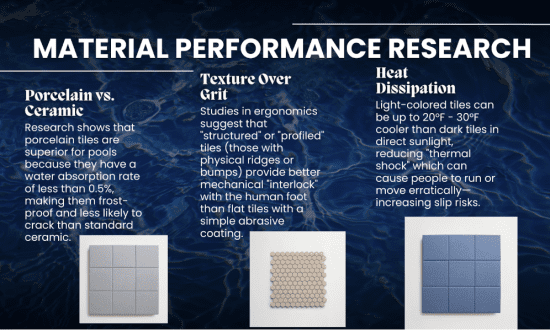
In a garden oasis, traction should feel intentional, not industrial. Matte or natural finishes perform best near wet areas. Textured or rustic finishes add both grip and warmth, while grooved or ribbed details work especially well on steps and pool coping. Some surfaces also incorporate micro-abrasive coatings that improve grip without altering appearance.
Style-forward options that still prioritize safety
Today’s slip-friendly surfaces still support strong design. Stone-look porcelain creates a calm, timeless base. Wood-look porcelain adds warmth without the risks of rot or slick finishes. Patterned encaustic or cement styles suit covered dining zones, while treated terracotta brings texture and warmth when used thoughtfully. Large-format tiles offer a clean look, though they require confirmed slip ratings.
When shopping for tiles, ask not just about the material, but the finish. Here are some of the most slip-resistant outdoor patio tiles surface types:
- Matte or natural finishes: Avoid glossy tiles near any wet areas.
- Textured/rustic finishes: These add both visual interest and foot grip.
- Grooved or ribbed textures: Often found on pool coping or stair treads, they add extra control.
Grip or anti-slip coatings: Some tiles are manufactured with micro-abrasive coatings or sand-like surfaces.
Areas where traction matters most
If you plan selective upgrades, prioritize high-impact zones. These include pool surrounds, steps, patios exposed to rain, outdoor kitchens near sinks, and outdoor showers or changing areas.
Maintaining traction over time
Traction holds up best with regular care. Sweep debris often, reseal stone or cement when needed, and address algae early. When power washing, use moderate pressure to preserve textured finishes.
Materials That Age Gracefully Outdoors
The strongest garden oases rely on materials that weather well instead of fighting the elements. Stone-look porcelain, honed stone, textured concrete, and cement finishes all gain character over time.
When used selectively, these materials reinforce existing structures, resolve problem areas, and add contrast without overwhelming the space. As a result, the backyard improves with age rather than requiring constant replacement.
Small Upcycled Touches That Change How the Space Feels
Not every improvement needs a big budget. Often, the smallest creative choices shape the atmosphere.
An old ladder becomes a towel rack. Salvaged tiles add grip and visual interest when inlaid into steps. Vintage stools transform into plant stands or side tables. Together, these details reinforce the upcycled garden oasis feel while improving comfort and usability.
A Garden Oasis Designed to Evolve
The most compelling outdoor spaces never feel finished. Plants grow, materials soften, and each thoughtful addition builds on what came before.
By approaching garden oasis design through reuse, selective upgrades, and well-considered safety details, you create a backyard that feels grounded, personal, and enduring — a space that supports real life and grows more beautiful with every season.
