
Water-saving bathroom upgrades do not have to begin with a demolition bin. In many homes, the most sustainable renovation is the one that keeps the existing layout, vanity, tub and useful fixtures in place. A few targeted changes can reduce wasted water, improve comfort and make an older bathroom feel considered rather than dated. You also avoid the material waste, cost and disruption that come with replacing an entire room.
Why Water-Saving Bathroom Upgrades Start With What You Have
Bathroom renovations often create more waste than homeowners expect. A working vanity gets removed because its finish looks tired. A solid bathtub gets replaced because the taps feel old-fashioned. Cabinets, mirrors, tiles and hardware may all end up in a skip even though much of the room remains perfectly serviceable.
Before replacing anything, walk through the room and separate appearance from performance. Does the tap leak, or does it simply need new hardware? Is the vanity structurally damaged, or would paint and different handles change the way it feels? Is the toilet failing, or does it only need a new flapper or fill valve?
This repair-first approach is upcycling in its most practical form. You are not turning a discarded object into something completely different. You are extending the useful life of what already exists, then improving the parts that no longer work well.
The Water-Saving Bathroom Upgrades That Pay Off First
Start with the small failures that quietly waste water every day. A dripping tap may seem minor, but a steady leak can send a surprising amount of clean water down the drain. Replacing a worn washer, cartridge or seal may solve the problem without replacing the entire fixture.
A running toilet deserves attention too. The cause may be a worn flapper, a faulty fill valve or a poorly adjusted float. These parts are usually far less expensive than a new toilet, and repairing them preserves the existing ceramic bowl and tank.
Low-flow showerheads and faucet aerators can also reduce water use without making the bathroom feel impractical. A good showerhead maintains pressure by mixing air into the flow, while an aerator limits the amount of water leaving the tap. Choose compatible fittings rather than buying the cheapest option and assuming it will work with your existing connections.
Hot water waste matters as well. If you wait a long time for the shower to warm up, insulate accessible hot-water pipes or ask a professional whether the layout can be improved. You may also save energy by shortening the distance water travels between the heater and the tap.
Keep the Layout and Refresh the Surfaces
Changing the bathroom’s layout often creates the largest expense and the most waste. Moving a toilet, shower or basin can mean opening walls, relocating drains and replacing flooring. If the current layout works, keep it and spend your attention on the visible details.
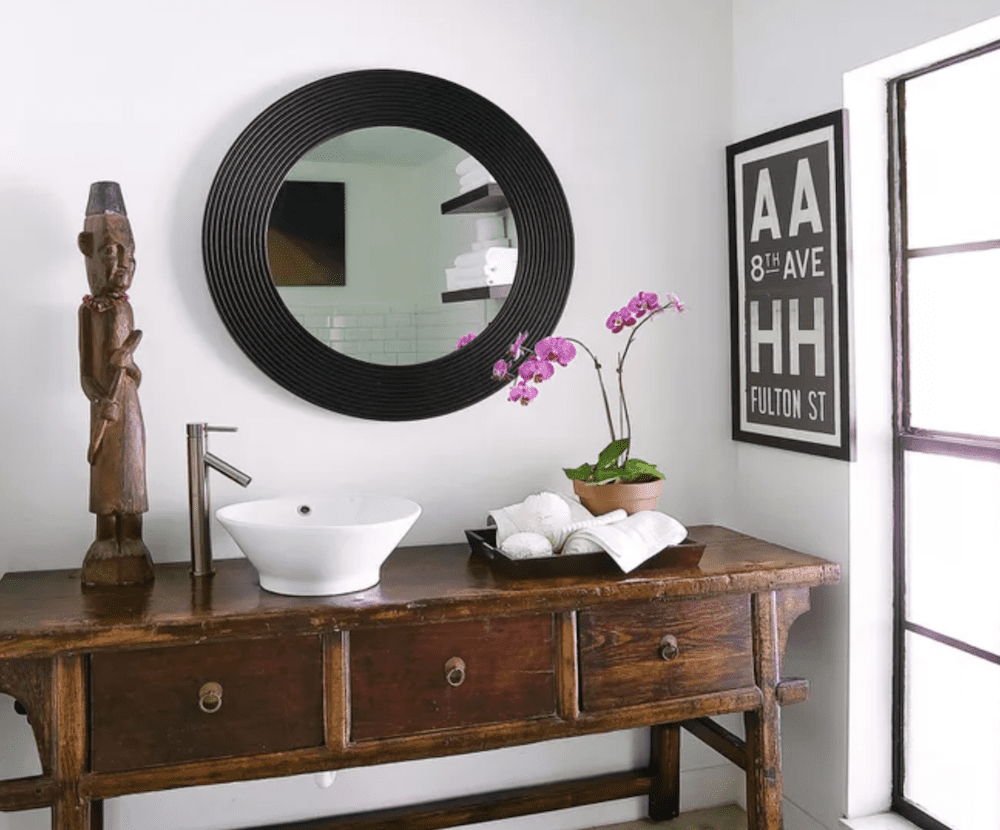
An old vanity can often be cleaned, repaired and repainted. Reclaimed timber may create a new countertop, while second-hand knobs, handles or a vintage mirror can shift the room’s personality without requiring new cabinetry. Even a dated basin may look intentional once you pair it with fresh wall colour, better lighting and carefully chosen hardware.
A solid bathtub deserves the same patience. If the structure remains sound, professional refinishing may give it another decade of service. Deep cracks, serious corrosion or persistent leaks require a more cautious assessment, but cosmetic age alone is not a reason to discard a useful fixture.
The goal is not to make every element match. A bathroom with a repaired vanity, an older tub and a few newer efficiency upgrades can feel more distinctive than a room assembled from one showroom collection.
Find Leaks Before They Become Renovations
The most important water-saving upgrade may be the one you cannot see. Check beneath basins, around toilet connections and behind accessible panels for dampness, staining or mineral deposits. Pay attention to musty smells, swollen cabinetry, loose tiles and flooring that feels soft underfoot.
A hidden leak can waste water while damaging drywall, subfloors and insulation. By the time the damage becomes visible, the repair may involve much more than tightening a fitting. If you notice a sudden increase in water use or hear water running when every fixture is off, investigate promptly.
This is also where DIY enthusiasm needs a boundary. Cosmetic work, hardware changes and simple maintenance may be manageable at home. Leaks inside walls, damaged supply lines, sewer problems and drain repairs need proper diagnosis. A local plumbing richmond professional can identify the source before a small plumbing problem becomes a major renovation.
Make Water-Saving Bathroom Upgrades Part of Daily Life
Efficiency continues after the tools are put away. Fix leaks as soon as you notice them, run washing machines with full loads and avoid treating the toilet as a rubbish bin. Hair, wipes, grease and harsh materials can create blockages that require more water, chemicals and repair work to resolve.
If you are also improving a laundry or utility area, our guide to what can go down a workshop sink offers a useful reminder: protecting the drain is part of protecting the whole water system.
Keep a few replacement washers, aerators and basic seals on hand so a small repair does not become a postponed repair. Clean showerheads periodically and check the toilet’s internal components when you notice weak flushing, constant refilling or unexplained sounds.
The most sustainable bathroom is not necessarily the newest one. It is the room that uses less water, keeps useful materials in service and receives the right repair before a small problem becomes a full replacement. Preserve what works, improve what does not and let the bathroom evolve without sending its entire history to landfill.
