

Severe storms can leave homeowners scrambling to protect their properties, but emergency home repairs involve more than simply fixing visible damage. The choices made in the first few days after a storm can influence insurance claims, rebuilding costs, and the amount of material that ends up in landfill. By documenting damage carefully and looking for opportunities to repair or repurpose existing materials, homeowners can recover more sustainably while protecting their investment.
Planning Emergency Home Repairs
Safety should always be your first priority. Before entering a damaged building, check for hazards such as downed power lines, gas leaks, standing water near electrical systems, or unstable structures. Once the property is safe to access, begin documenting the damage before moving anything.
Take photographs and videos from multiple angles, capturing both close-up damage and wider views that show the overall condition of the property. Record the date, weather conditions, and any temporary measures taken to prevent further deterioration.
Starting with thorough documentation helps both the restoration process and future decision-making about which materials can realistically be saved.
Document Damage Before Repairs
Insurance providers typically expect clear evidence of the property’s condition before major work begins.
Create a written inventory of damaged items and keep receipts for every emergency expense, including tarps, plywood, pumps, and temporary repairs. If contractors carry out stabilization work, ask for detailed invoices describing exactly what was completed.
This information also strengthens construction emergency claims by creating a clear timeline of the damage and the steps taken to prevent further loss.
Salvage Building Materials Instead of Replacing Them
Storm recovery often results in perfectly usable materials being thrown away unnecessarily.
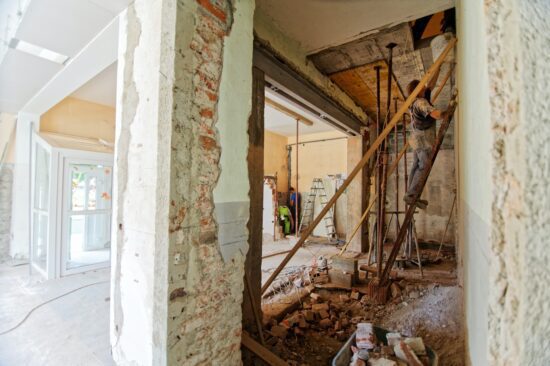
Before beginning demolition, inspect building components that may still have years of life remaining. Depending on the extent of the damage, many materials can be repaired, restored, or incorporated into future projects.
Examples include:
- Solid wood doors
- Hardwood flooring
- Structural lumber that remains dry and sound
- Brick and concrete pavers
- Metal roofing panels
- Kitchen cabinet boxes
- Interior trim and mouldings
- Light fixtures and door hardware
Separating reusable materials before demolition reduces waste and may also lower rebuilding costs.
Insurance Considerations During Emergency Home Repairs
Insurance can play an important role in the recovery process, but coverage depends on both the cause of the damage and the policy itself.
Many policies cover reasonable emergency measures taken to prevent additional damage, such as tarping a damaged roof, boarding broken windows, or removing standing water. These temporary actions should always be documented with photographs and receipts.
Before authorizing large-scale demolition, review your policy or speak with your insurer whenever possible. Waiting for an adjuster’s inspection may help avoid disputes over repairs that cannot be verified later.
Reduce Construction Waste During Recovery
Construction and demolition debris accounts for a significant share of landfill waste every year, much of which could be avoided through thoughtful material recovery.
Rather than replacing everything automatically, consider whether damaged components can be restored.
For example:
- Refinish hardwood flooring instead of installing new boards.
- Replace cabinet doors while keeping existing cabinet boxes.
- Clean and repaint solid timber trim.
- Reuse bricks and pavers in landscaping projects.
- Transform reclaimed lumber into shelving, raised garden beds, or outdoor furniture.
Repairing existing materials often saves both money and natural resources while preserving the character of a home.
Sustainable Choices During Emergency Home Repairs
Rebuilding after a storm provides an opportunity to make environmentally responsible decisions.
When replacement is necessary, choose durable materials that will last longer and require less maintenance. Look for reclaimed timber, recycled metal products, refurbished fixtures, or locally sourced materials that reduce transportation impacts.
Working with salvage yards and reuse centres can also uncover high-quality building materials that cost less than buying new while preventing usable products from entering the waste stream.
Donate and Recycle What You Cannot Reuse
Not every salvaged material will suit your renovation plans, but many items can still benefit someone else.
Architectural salvage stores, community reuse centres, and nonprofit building material organisations frequently accept doors, windows, cabinets, hardware, lighting, and other reusable products. Metals, untreated wood, concrete, and glass can often be recycled through dedicated facilities.
Taking time to sort materials responsibly reduces landfill waste and supports a more circular approach to construction.
Build Back Better
Recovering from storm damage is rarely straightforward, but it offers an opportunity to rebuild more thoughtfully.
Careful documentation, a clear understanding of your insurance coverage, and a commitment to salvaging usable materials can make the recovery process both more affordable and more sustainable. Every door that is restored, every brick that is reused, and every piece of reclaimed timber that finds a new purpose helps reduce environmental impact while giving valuable materials a second life.
Emergency home repairs are not just about restoring a property—they are also an opportunity to build back smarter, minimise waste, and create more resilient homes for the future.
