
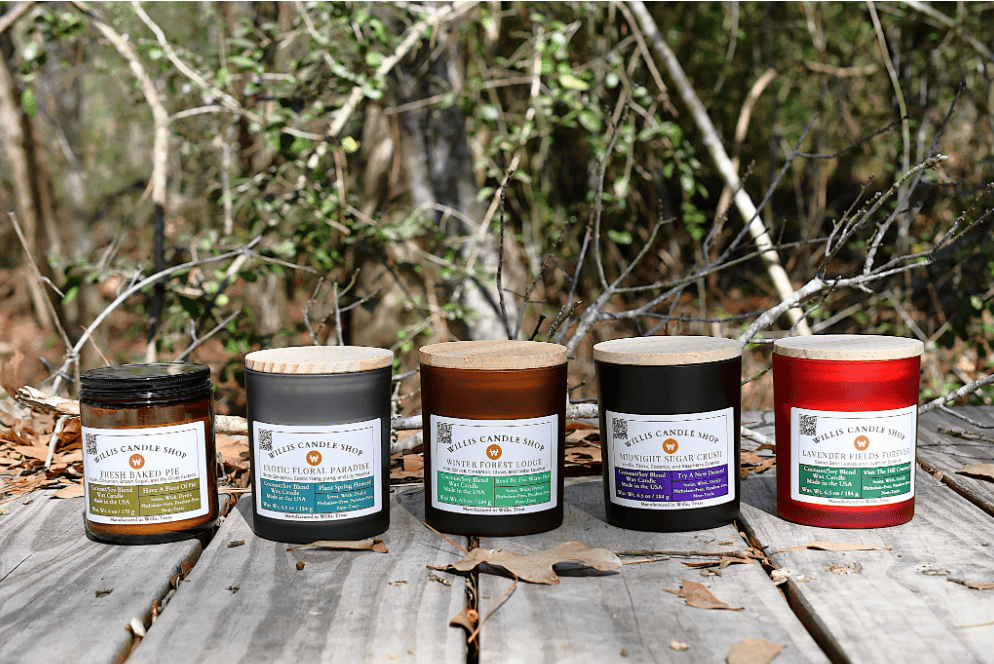
Eco-friendly candles belong to a much larger conversation about how we create homes that feel authentic, grounded and deeply personal. Sustainable choices extend far beyond major furniture investments or structural remodels. They include every material we bring across the threshold and every object we choose to live with.
Eco-Friendly Candles Begin With a Sustainable Home
Boutique hotels, designers and creative homeowners often turn to reclaimed timber, vintage glass and salvaged architectural elements to give a space a genuine sense of history. An old workbench becomes a console. Weathered floorboards become open shelving. Vintage ceramic vessels find new purpose as planters or storage.
These materials carry evidence of their earlier lives, giving a room texture and character that mass-produced perfection rarely achieves. Rather than creating a home around one fleeting trend, they allow a space to evolve gradually and reflect the people living within it.
Material Honesty Shapes a Personal Home
Conscious curation asks us to evaluate more than appearance. From the textiles covering our sofas to the accessories resting on our coffee tables, material honesty matters. Where did an object come from? How was it made? Will it age well? Can it be repaired, reused or transformed when its original purpose ends?
The upcycling and home decor movement has encouraged us to ask these questions about wood, metal, fabric, glass and rubber. However, one category often escapes the same scrutiny: the home fragrance and ambient accessories that shape how a room feels.
Home Fragrance Is Part of the Design Story
Lighting, textiles and fragrance are the finishing strokes that turn a collection of furniture into a warm and inviting home. They soften a space and create a sensory identity through colour, texture, scent and glow.
Seasonal touches, including those found in a fall and winter candle collection, can introduce warmth and atmosphere without requiring an entire room to be redecorated.
Yet creating a truly sustainable living space means examining these smaller objects as carefully as the furniture surrounding them. Candles bring light, fragrance and ritual into our homes, but they are also designed to be burned and eventually replaced. Their wax, fragrance, wick, vessel and packaging all contribute to their environmental footprint.
What Makes Eco-Friendly Candles Different?
There is no universal standard that determines whether a candle is eco-friendly. Words such as natural, clean and sustainable can appear on packaging without explaining how the product was made.
Instead, consider the complete candle. A renewable wax may sound responsible, but that benefit becomes less convincing if the product arrives surrounded by plastic or leaves half its contents unused.
Longevity also matters. A well-made candle that burns evenly and completely may create less waste than a cheaper candle that tunnels, smokes or needs to be replaced quickly. Material choices matter, but so do performance, packaging and the potential for reuse.
Start With the Wax
Most candles use paraffin, soy, coconut, beeswax or a blend of several waxes. Each comes with benefits and trade-offs.
Paraffin comes from petroleum and remains popular because it is affordable and holds fragrance effectively. Soy and coconut waxes come from renewable crops, although their environmental impact still depends on how those crops are grown, processed and transported. Beeswax has a long history in candle making and often burns slowly, but it is an animal-derived material and may not suit every household.
Blended waxes are not automatically inferior. Combining different waxes can improve stability, scent distribution and burn performance. Rather than selecting a candle based on one ingredient alone, look for a maker that clearly identifies its materials and explains why they were chosen.
Eco-Friendly Candles Need Fragrance Transparency
Fragrance is often the least transparent part of a candle. Some makers use essential oils, others use formulated fragrance oils and many use a combination.
Natural does not automatically mean harmless, just as synthetic does not automatically mean unsafe. Both botanical extracts and manufactured fragrance ingredients can affect sensitive people. Responsible makers should test the completed candle, follow established fragrance limits and provide useful information about their ingredients.
If someone in your home experiences headaches, asthma or fragrance sensitivity, use scented products sparingly and ventilate the room. An unscented candle may offer the atmosphere you want without added fragrance.
The strongest sustainability claims tend to be specific. Information about wax sources, wick materials, packaging and production practices is more useful than an unexplained clean or green label.
Packaging Shapes the Candle’s Impact
A reusable glass, ceramic or metal vessel gives a candle potential value after its final burn. However, reusable packaging only reduces waste when someone actually finds a second purpose for it.
Before buying, consider whether the vessel has a practical shape and finish. Straight-sided containers are often easier to clean and repurpose than narrow or highly decorative jars. A timeless design is also more likely to remain useful after seasonal colours and trends have passed.
Look at the outer packaging too. Elaborate boxes, plastic windows, foam inserts and ribbons may create a luxurious presentation, but they also produce waste. Recycled paper, recyclable cardboard and minimal plastic offer a more considered approach.
Locally made candles may require less transportation and packaging, particularly when the maker offers refills or accepts empty containers for reuse.
Help Eco-Friendly Candles Last Longer
The way you use a candle can be just as important as the materials used to make it. Follow the maker’s wick-trimming instructions before lighting. An overly long wick may create a larger flame, produce smoke and consume wax more quickly.
During the first burn, allow the melted wax to approach the sides of the vessel if the manufacturer recommends it. This can help prevent tunnelling, where the candle burns down through the centre and leaves unused wax around the edges.
Keep candles away from drafts, which can cause uneven burning and flickering. Never leave a flame unattended or place a candle near curtains, paper or other flammable materials. Stop using it when it reaches the manufacturer’s recommended minimum wax level.
Thoughtful care helps a candle burn more evenly and last longer. Consequently, fewer candles, containers and deliveries are needed over time.
Upcycle Eco-Friendly Candles After the Final Burn
Once a candle has finished, its container can become part of a circular home rather than another disposable purchase. Follow the manufacturer’s directions for safely removing the remaining wax and wick hardware.
Clean jars can hold buttons, matches, cotton pads or office supplies. Ceramic vessels can become planters for succulents or propagation containers for cuttings. Wider jars work well for jewellery, keys and the small household objects that tend to create clutter.
Choose a new purpose that suits the original material. Avoid using a candle vessel for food unless the manufacturer confirms that it is food safe. If you cannot reuse it, separate its components and check which materials your local recycling program accepts.
This transformation reflects the spirit behind creative upcycling projects: noticing an object’s next possibility before treating it as waste.
Style Eco-Friendly Candles Without Creating Clutter
A sustainable home does not need a candle on every surface or a new fragrance for every occasion. Choose scents you genuinely enjoy and give each candle time to become part of the room.
Changing the objects around a candle can refresh its seasonal character without replacing it. Place the same vessel beside fallen leaves and warm textiles in autumn, evergreen clippings in winter or fresh flowers in spring. A secondhand tray, reclaimed wood riser or vintage mirror can also help it feel newly styled.
The best eco-friendly candles are not necessarily the ones with the longest list of green claims. They are made transparently, packaged thoughtfully, used completely and designed with their next life in mind.
Materials carry stories, even when they arrive in small packages. By choosing fewer candles, caring for them properly and reusing their vessels, home fragrance can become part of a slower and more intentional approach to creating a beautiful home.
