
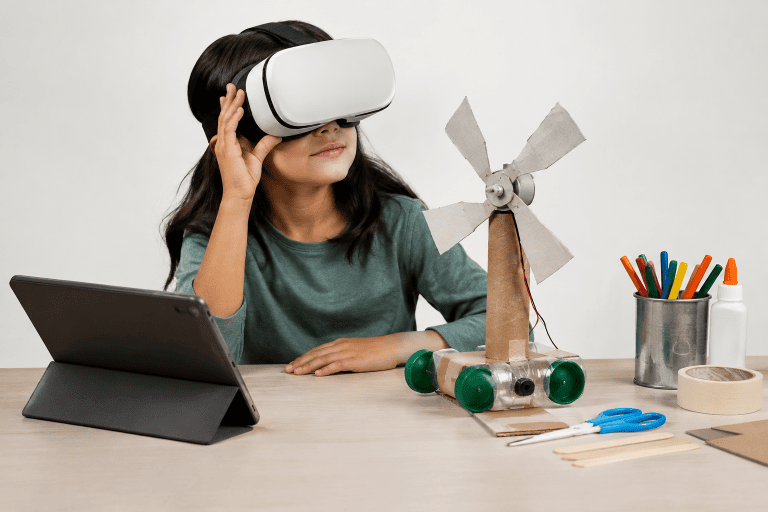
Upcycling projects for kids can turn a virtual ocean adventure into a shoebox habitat or a digital bridge tour into a cardboard engineering challenge. The screen sparks a question, but the most interesting part happens when children start making something themselves. Suddenly, an empty cereal box becomes building material, and leftover packaging offers possibilities beyond the recycling bin. Pairing immersive learning with creative reuse gives children a practical way to explore what they have seen. It also introduces a valuable habit: looking at familiar materials and imagining what else they could become.
How Upcycling Projects for Kids Connect Screens And Making
Immersive learning can introduce children to places and processes they cannot easily experience firsthand. Augmented reality adds digital elements to a view of the real world, while virtual reality creates an environment to explore. A child might examine an animal habitat, look inside a machine, or investigate the structure of a bridge. Those experiences become starting points for questions that continue away from the screen.
Families wanting a structured introduction can shop science kits for kids at Abacus Brands and extend the activities with reclaimed materials. After exploring a scientific concept, children could build a related model using cardboard, clean containers, or fabric scraps. The kit provides a starting point, while the upcycling challenge invites them to make their own decisions. Ask what they want to demonstrate before choosing materials, so the finished creation has a purpose beyond decoration.
Start With A Question And A Materials Box
A useful project begins with something children want to figure out. How does a polar animal stay sheltered? What stops a bridge from collapsing? Exploring pictures, videos, or interactive models can help them notice details before they begin building. Then bring out a modest collection of clean, reusable materials and invite them to consider what each item could do.
Corrugated cardboard might provide structure, while an old cotton shirt could become a flexible covering. Paper tubes can act as supports, and a shoebox lid makes a convenient base. Encourage children to compare the materials rather than automatically reaching for something new. Our article on raising resourceful kids explores a similar approach to everyday problem-solving. Choosing from what is available gives the project its creative challenge.
Upcycling Projects for Kids Inspired By Nature
An ocean exploration can lead naturally to a habitat model made from discarded packaging. Turn a shoebox on its side, use scrap paper for seaweed, and suspend cardboard fish with leftover thread. Ask children to choose a particular habitat rather than mixing every ocean animal into one scene. Their model can show where an animal finds food, how it shelters, and which features help it survive.
Keep the conversation going as the habitat takes shape. Would this animal live near the surface or closer to the seabed? Which parts of the model represent living things, and which represent the physical environment? Drawing and labeling encourage close observation, giving children another way to record their ideas. Labels and sketches also help them explain what their reused materials represent.
Build, Test, And Improve The Design
Engineering topics offer a particularly satisfying bridge between digital exploration and physical making. After looking at different bridge structures, children can build a span between two low supports using reclaimed cardboard. Keep the gap and testing objects consistent so they can compare designs fairly. Start with light objects, adding weight gradually over a clear surface. When the bridge bends, invite them to examine where and why it happened.
The next version might use folded cardboard, triangular supports, or a different arrangement of paper tubes. Avoid fixing every weak point for them; ask what they would change first. Younger children can describe what they notice, while older learners can sketch designs and record results. The aim is to make revision part of the activity, so an unsuccessful attempt becomes useful information.
Make Upcycling Projects for Kids Work At Any Age
Younger children usually need a simple question, a small selection of materials, and help with preparation. An adult can cut cardboard shapes while the child chooses, arranges, and explains them. Older elementary learners can take more responsibility for planning and testing. Middle school students can add measurements, compare prototypes, or explain how their material choices affected the outcome.
Keep access and comfort in mind when choosing the digital component. A shared video, printed photograph, or library book can introduce the same project without a headset. If using AR or VR, follow the product’s age guidance and allow children to stop whenever they feel uncomfortable. Check reclaimed supplies for sharp edges and small parts, and leave cutting tough plastic or using sharp tools to adults. A manageable project leaves more room for curiosity.
Give The Learning A Life Beyond The Project
Once the making is finished, ask children to explain one discovery and one change they would make next time. A reused notebook can hold sketches, predictions, and photographs of each version. This creates a record of their thinking without turning every activity into a formal assignment. For adults interested in wider educational applications, university-led VR and AR learning initiatives offer another avenue to explore.
The materials deserve a closing conversation, too. Separate pieces that can be used again and consider whether the model could become the starting point for another challenge. A cardboard habitat might later become a theater, while bridge components could find their way into a miniature town. That continuing transformation is what makes upcycling such a natural companion to hands-on learning: each discovery leaves behind the raw materials for another.
