
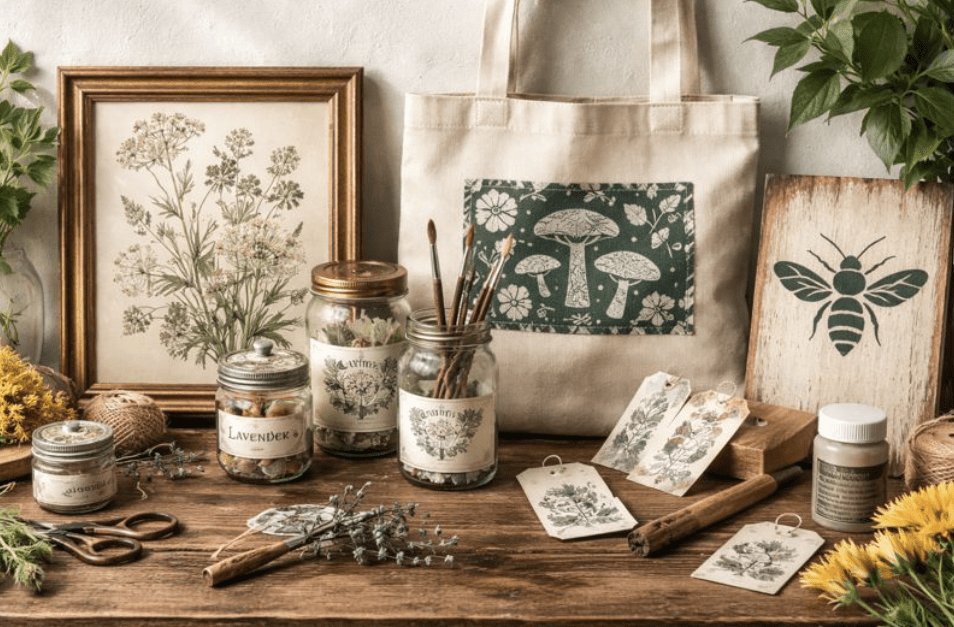
Gallery-worthy decor starts with seeing potential where others see clutter. A scratched thrift-store frame. A stack of jars with no matching lids. A tote bag with a stain that won’t quit. At first glance, these pieces look like work. With a little intention, they become objects that feel considered, cohesive, and worthy of display.
Upcycling at this level isn’t about perfection or polish. It’s about direction. When a repurposed item has a clear visual idea behind it, it stops feeling like a project and starts feeling like a piece.
Why Gallery-Worthy Decor Feels Different From Typical DIY
Gallery-worthy decor doesn’t rely on novelty or trends. It relies on restraint.
Instead of trying to fix or disguise every flaw, it works with what’s already there. Wear becomes texture. Age becomes context. Mismatches become part of the story. This mindset shift is what separates a one-off DIY from something that feels curated.
The goal isn’t to impress. It’s to belong.
Start With the Object When Creating Gallery-Worthy Decor
Before thinking about colors, patterns, or techniques, look at the object itself.
Ask:
- What surface am I working on?
- What imperfection already defines this piece?
- What style naturally suits its age or shape?
A vintage frame often calls for botanical prints or etchings. Mason jars lean toward simple label art. Old totes benefit from bold shapes that hold up to wear. When the design matches the object’s personality, the result feels inevitable rather than forced.
Matching Design Styles to Gallery-Worthy Decor Projects
Different materials ask for different approaches.
Thrifted frames tend to work best with restrained, print-style art. Glass jars benefit from minimal graphics that respect transparency. Wood signs need bold, readable forms that sit comfortably on textured surfaces. Fabric wants contrast and repetition, especially when you’re covering wear.
Matching style to surface isn’t about rules. It’s about visual harmony.
Keep Design Practical So It Translates Off the Screen
One of the easiest ways to lose the gallery-worthy feel is designing something that only works digitally.
A few grounding principles help:
- Design for the surface, not the screen
- Limit colors to what you can realistically apply
- Avoid ultra-fine detail unless you’re printing
- Test scale on scrap paper before committing
Clean edges, proper spacing, and alignment do more for a finished look than complexity ever will.
One Idea, Multiple Pieces
The most sustainable upcycling happens when one idea does more than one job.
A single illustration or motif can become framed wall art, jar labels, a simple stencil, fabric patches, or gift tags made from offcuts. Reusing a strong visual direction across multiple objects creates cohesion without repetition.
This is where upcycling shifts from “projects” to a collection.
Showing Gallery-Worthy Decor Without Overproducing Content
If you share or sell your work, showing the transformation helps people understand it instantly.
You don’t need a full tutorial. A simple sequence works:
- a before image
- the finished piece
- a close-up detail
If you want to add subtle movement to a still image of the final result, using image animation online can help convey texture and transformation without turning your workspace into a production set.
The object should remain the focus. Motion is just support.
Practical Constraints That Make Pieces Feel Intentional
Gallery-worthy outcomes don’t ignore real-world limits.
Ventilation matters when sealing or spraying. Heat tools need patience and proper cure times. And if you sell your work, originality matters. Avoid recognizable characters or logos that create problems later.
Respecting these constraints keeps the process sustainable and enjoyable.
Keeping Designs Practical So They Translate Off the Screen
Trends fade quickly. Intentional design lasts.
When an upcycled piece is guided by proportion, restraint, and material awareness, it doesn’t announce when it was made. It simply fits. That’s why gallery-worthy decor feels calm instead of busy and confident instead of loud.
It doesn’t ask for attention. It earns it.
Practical Constraints That Improve Long-Term Results
Upcycling doesn’t require perfect materials or expensive supplies. It requires clarity.
Start with the object. Design for its surface. Reuse your strongest ideas. Let wear and history be part of the result. When you do, almost-trash becomes something that feels collected, intentional, and worth keeping.
