
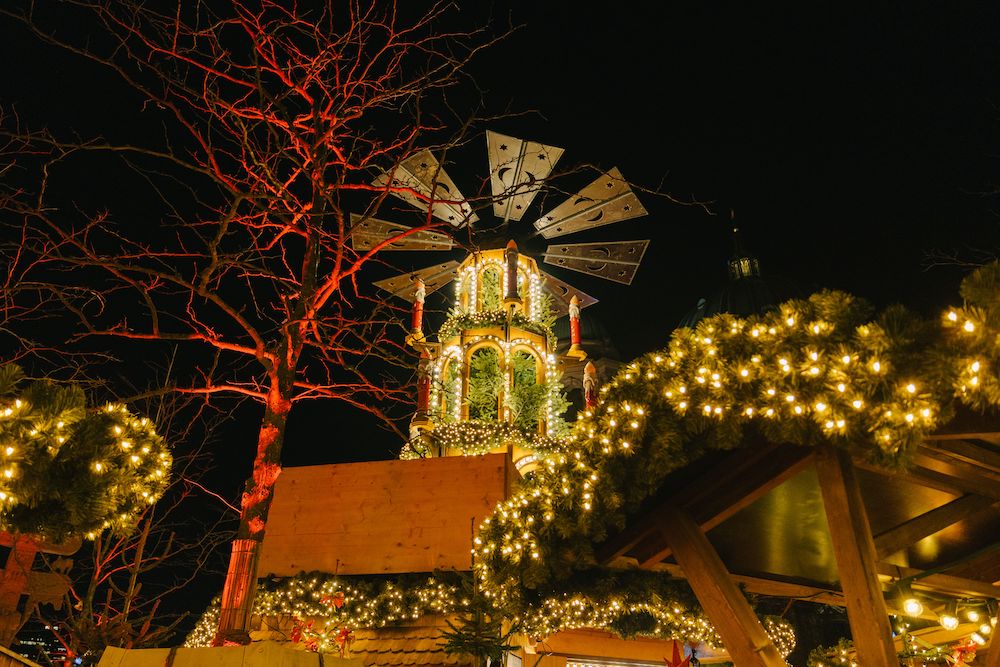
A Christmas Market can be a treasure trove of upcycled gifts, reclaimed materials, and vintage finds—if you know how to look beyond the twinkling lights. Among the wooden ornaments and wool stockings, you might discover a bag made from retired sailcloth or a candle holder carved from an old beam. These pieces bring something special to holiday giving: beautiful materials, thoughtful craftsmanship, and a story that started long before the wrapping paper.
The tricky part is that a wooden chalet makes almost everything look handmade. Warm lights and cinnamon in the air can dress up a factory ornament just as easily as an original creation. Finding something worth giving takes a little curiosity. Look closely, talk to the seller, and imagine how the piece will fit into someone’s life once the festive glow fades.
Look for Second-Life Materials at a Christmas Market
Start with the materials, because they often reveal the most interesting gifts. Stockings sewn from old wool coats, patchwork cushions pieced from shirts, and tote bags fashioned from coffee sacks all give existing textiles another purpose. An original pocket, faded logo, or unexpected fabric combination can become the detail that makes a piece memorable. However, appearance alone cannot confirm its origins, so ask what the maker started with.
Reclaimed wood offers plenty of possibilities, from picture frames to decorative stars and candle holders. Old nail holes and variations in color can hint at a previous life as a floorboard or beam. Elsewhere, look for leather offcuts stitched into wallets, bicycle chains reworked into bottle openers, and wine bottles transformed into vases. Vintage linens, ornaments, and books also make thoughtful presents without needing any alteration.
Check the construction as carefully as the backstory. Inspect seams, test fastenings, and feel for rough edges. For anything intended to hold food or drink, ask whether its materials and finish suit that purpose. Our recent guide to telling when weathered materials still have life left makes a useful distinction: signs of age can add character, while sound construction determines whether something deserves another chapter.
Ask Four Questions Before You Buy
A conversation with the seller can reveal more than an “eco” label. Start with “What did this used to be?” A specific answer, such as discarded hotel linens or upholstery offcuts, helps you understand the material’s journey. Follow with “How did you change it?” Cutting, sewing, carving, or refinishing can all create value, provided the result works well for its new purpose.
Next, ask where the work happened and who made the item. A stallholder may represent several artisans, so they needn’t personally produce everything on display. Finally, ask how to care for it. A washable cover, replaceable fitting, or repairable seam can help a gift stay useful. Before paying, picture the recipient using it: a reclaimed frame for someone who prints photographs has a clearer future than an ornament chosen simply because it sparkles.
Give Yourself Time for Christmas Market Shopping
Thoughtful shopping benefits from a slower pace. Walk through the market before committing, compare pieces, and notice which stalls offer clear information about their makers. You may discover that the first attractive scarf uses new synthetic fabric, while another combines reclaimed wool with careful stitching. Taking a break also helps separate a lasting find from something that only appeals in the moment.
For travelers exploring several markets, comparing stalls across different stops can make the gift hunt feel less rushed. A December sailing gives you time to browse one day, ask questions, and decide the next, so impulse buys that end up in a drawer are easier to skip. Limited luggage space helps as well, nudging you toward small, durable gifts instead of bulky souvenirs. Keep a short recipient list, and choose pieces for their materials, craftsmanship, and usefulness.
Three Markets With Distinctive Finds
Strasbourg’s OFF Market offers a particularly direct connection to reuse. At Place Grimmeissen, colorful shipping containers house a mix of vintage furniture, secondhand clothing, books, pre-owned toys, and artisan creations. The city also highlights upcycled clothing within the OFF Market’s responsible-shopping offer. Browse for smaller pieces with everyday potential, such as a textile accessory or a vintage book chosen around someone’s interests.
Nuremberg’s Christkindlesmarkt brings a different appeal through traditional craftsmanship. Its stalls offer wooden toys, often handmade decorations, and local specialties, including gold-foil angels and Zwetschgenmännle, decorative figures made with prunes. These traditions provide an alternative to generic souvenirs, although handmade goods are not necessarily upcycled. Ask about the materials and choose something your recipient could enjoy year after year.
Vienna’s Art Advent at Karlsplatz puts craftsmanship at the heart of its selection process. The organizer requires exhibitors to present their work to an artistic jury that assesses artistic quality and workmanship, and describes production that often uses regional resources. This makes it a promising setting for conversations about how pieces are made. Look closely at woodwork, textiles, and glass, then ask which materials are reclaimed or recycled rather than assuming they all are.
Bring Your Christmas Market Finds Home With a Story
Before buying, consider what will happen after Christmas. Loose glitter, fragile embellishments, and novelty electronics can make decorations difficult to maintain. Likewise, a vague environmental claim deserves a specific question about materials or production. Bring a cloth bag, decline unnecessary packaging, and accept protective wrapping when a delicate item genuinely needs it.
At home, finish the gift with a saved bag, fabric remnant, or vintage tea towel. Include a note explaining its previous life and any care instructions the maker shared. “This fabric was once a sail” gives the recipient something to appreciate beyond its appearance. A well-chosen gift turns rescued materials into part of someone’s daily life—and that is where its next story begins.
