
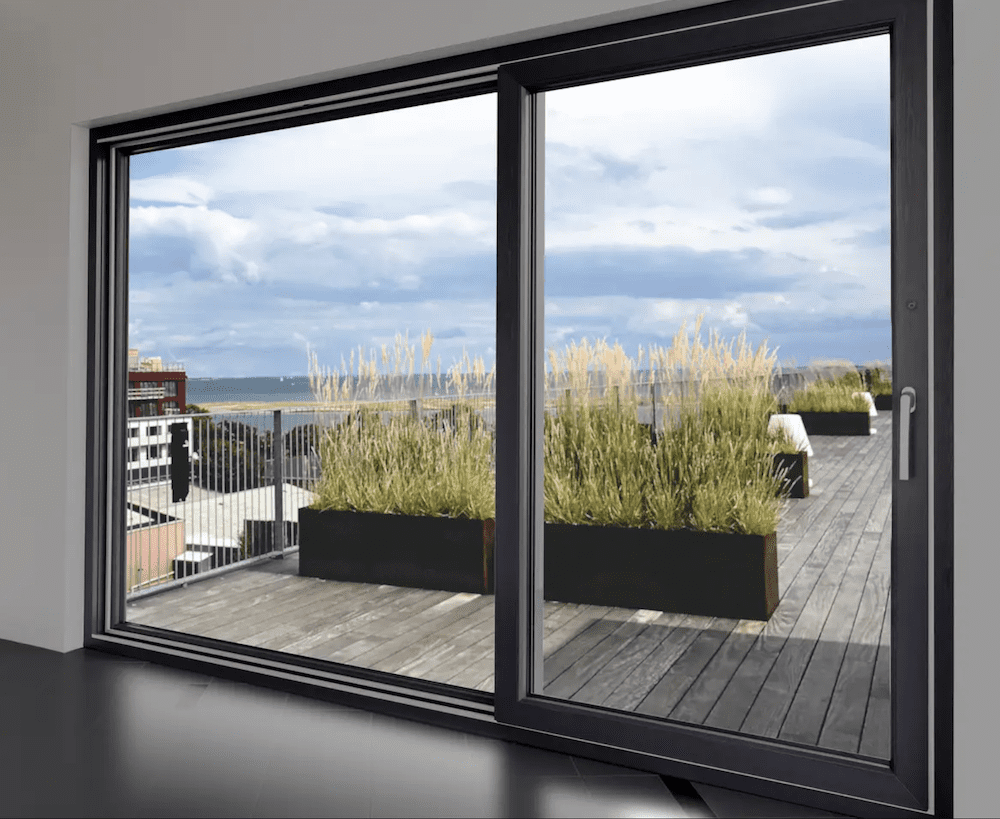
When picking patio doors, the goal isn’t simply to find a way out — it’s to find a way through: a transition that feels intentional, light-filled, and enduring. Some of the most profound forms of upcycling don’t begin in the studio or the salvage yard — they begin in thought. They begin when we look at something ordinary, something so familiar it’s nearly invisible, and decide it deserves more care. The patio door, for instance, can be more than a passageway — it can be an architectural expression of sustainability and connection.
A well-chosen door does more than open to the outdoors. It reframes the home’s relationship with light, air, and flow. The right design connects the interior to the landscape, reduces energy loss, and invites longevity into the very architecture of everyday life.
Reclaiming the View
Traditional sliding doors tend to obstruct the very landscapes they’re meant to frame. Modern sustainable designs reverse that logic, creating space for openness, clarity, and connection.
When picking patio doors, look for details that offer both beauty and utility:
- Exceptionally Slim Frame Profiles: Strong yet slender structures that maximize your view.
- Maximized Glass-to-Frame Ratio: More glass equals more daylight and reduced dependence on artificial light.
- Panoramic, Uninterrupted Views: Minimal structure transforms walls into living windows.
- Concealed or Minimalist Hardware: Flush handles and hidden tracks keep the design seamless and elegant.
- Seamless Transitions: Low-profile sills blur boundaries between indoors and out, improving accessibility.
- Enhanced Natural Light: Expansive glazing enlarges small spaces and supports mental well-being.
- Emphasis on Clean Lines: Simplified geometry calms visual noise and anchors modern interiors.
- Architectural Versatility: A minimalist frame suits both contemporary and classic settings with ease.
Each of these choices serves a dual purpose — aesthetic refinement and environmental intelligence — bringing a sense of balance that’s both visual and practical.
Picking Patio Doors: Sustainable Function in Motion
Sustainability isn’t only about materials — it’s about longevity and ease. Well-engineered systems, such as lift-and-slide mechanisms, allow even large glass panels to glide smoothly, sealing tightly for insulation and security. Fewer breakdowns and longer lifespans mean less waste over time.
The true genius of a German patio door is revealed the moment you operate it. The user experience is defined by an elegant and incredibly effective mechanism known as “lift-and-slide.” A single, oversized handle serves as the point of command. Turning it 180 degrees engages an internal gearing system that smoothly lifts the entire door panel by a few millimeters, disengaging it from the deep, compressive seals. Once lifted, the panel—which can be immense and weigh hundreds of pounds—glides effortlessly along its track with the push of a finger. This is a stark contrast to the wrestling match often required to move old, conventional sliders.
Picking Patio Doors: Choosing Materials with Integrity
Material honesty is at the heart of sustainable design. Steel-reinforced uPVC offers strong insulation and minimal upkeep. Aluminum frames combine slim structure with recyclability. Wood-aluminum hybrids pair natural warmth indoors with weatherproof durability outside.
The guiding principle is endurance. A door designed to last decades keeps materials in use, reduces replacement cycles, and anchors the home in long-term sustainability — all core ideas in upcycled design.
Designing for Light and Connection
Natural light is one of the most renewable design tools we have. Choosing doors that maximize glazing reduces the need for electric lighting and expands the feeling of space. Positioning them strategically can harness passive solar warmth in winter or soft diffused light in summer.
When picking patio doors, consider not just where they’ll look best but where they’ll work best. A well-placed door aligns your home’s energy, light, and daily rhythm.
The Upcycling Mindset
Upcycling in design is about refinement over reinvention — a commitment to care, craft, and endurance. The patio door, though humble, embodies that philosophy beautifully. It proves that even the simplest architectural feature can evolve responsibly, balancing form and function with environmental mindfulness.
In a throwaway culture, choosing what lasts becomes a quiet act of resistance — and a powerful kind of beauty.
Picking Patio Doors: Conclusion
Picking patio doors for sustainable design is an invitation to think differently about the spaces we move through every day. The best doors don’t just open and close — they shape light, conserve energy, and remind us that sustainability begins with intention.
When design and longevity align, the threshold becomes more than a transition — it becomes a statement: a simple, lasting way to live lighter on the planet.
