
Upcycling workshop humidity can affect a reclaimed wood project long after the sanding dust has settled. The haze hangs in the light long after you switch off the sander. Weeks later, the chair you rebuilt develops a hairline crack up one leg. That second problem may have less to do with the glue than with how the wood responded to its new environment.
Working with salvaged materials creates two different air-related challenges. Dust from cutting, sanding, and taking pieces apart can spread beyond your work area. Dry indoor air can affect the wood you rescued. Understanding which problem you are dealing with makes it easier to protect both your space and your projects.
Why Upcycling Workshop Humidity and Dust Need Different Solutions
At the end of a sanding session, the first problem is easy to see. Fine dust hangs in the air, drifts toward the door, and settles on the piece you finished last week. There is too much of something in the air.
The second problem is less obvious. When cold outdoor air is heated indoors, its relative humidity drops. During the heating season, a room can become much drier than the place where an old piece of furniture was stored. Now there is too little moisture in the air.
These conditions can happen in the same room, but they call for different solutions. Dust needs to be captured and cleaned up. Dry air calls for attention to humidity.
Where Workshop Dust Comes From
Sanding is the obvious source, but the small pile on the bench tells only part of the story. Sawing reclaimed timber produces more debris, while scraping an old finish can send flakes and dust across the work area.
The material itself can hold dust, too. A thrifted armchair may have years of dust and loose fibres inside its padding. Pulling staples and peeling back the cover releases them. Old cushions, secondhand curtains, and crumbling foam can behave much the same way when disturbed.
Dust rarely stays where the work happened. It can travel through an open door or come inside on shoes, clothing, and the piece you carry through the house. That is how a project in the garage can leave a fine film on a shelf two rooms away.
Before sanding or stripping an unknown finish, identify what you are working with. Older coatings and materials may require precautions beyond your usual workshop cleanup.
Capture Dust in Your Upcycling Workshop Before It Spreads
The most useful place to control dust is where you create it. If the project and conditions allow, do dusty work outdoors or near an open garage door, away from the entrance to your home. Keep sanding in one defined area so the mess is easier to contain.
When using a power sander or saw, connect it to a suitable dust extractor if you can. Capturing dust at the tool gives it less opportunity to spread through the workshop. A drop cloth under your work can catch larger debris, but it will not collect the fine particles that become airborne.
Small habits help as well. Keep a cloth nearby to wipe down a piece before moving it. If it is still shedding dust, finish cleaning it in the work area before carrying it through the house.
Deal With Dust That Remains Airborne
Some fine dust will escape even a careful setup. It can drift into another room or settle on a wet finish, leaving grit on a project that looked clean when you set it down.
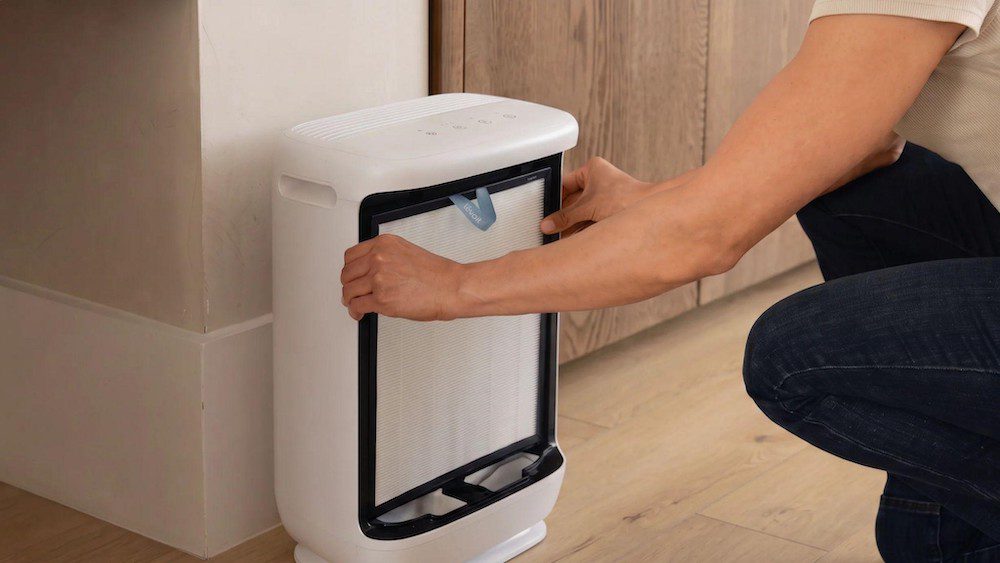
Air purifiers can help reduce the particles that remain airborne once dust has been handled at the tool, particularly in an enclosed workshop or a spare room with the door shut. If your setup allows it, running one while you work is fine, so long as it is treated as a supplement to source collection rather than a replacement for it.
After the dusty work is done, clean surfaces with a suitable vacuum and damp cloth. Avoid dry sweeping, which can send settled dust back into the air. Keep finished pieces away from the work area until the space has been cleaned.
How Upcycling Workshop Humidity Affects Reclaimed Wood
Wood responds to moisture in the air around it. Move a piece from a damp barn or unheated garage into a warm, dry home, and its moisture content may gradually change as it adjusts. That movement can contribute to gaps, problems at joints, veneer issues, or cracking.
Solid wood furniture can be particularly sensitive to changes in its environment. Reclaimed pieces can also be unpredictable when you do not know how they were stored or repaired before you found them.
Give a newly acquired piece time to acclimate in the space where you plan to work on or keep it. Aim for a reasonably stable indoor environment rather than large swings between damp and dry. A humidifier can help maintain a more stable indoor relative humidity, which may reduce the degree of moisture-related movement in wood.
Paint, glue, and finishes have their own application and curing requirements. Check their instructions before changing the conditions in a room where a project is drying.
Manage Upcycling Workshop Humidity in a Small Space
You may have a dedicated workshop, half a garage, or a kitchen table that gets cleared on Sundays. The available space changes your setup, but the order of work stays much the same.
Do the dusty stages in the most suitable area you have, and close the door to the rest of the home. Capture dust at the tool where possible. Clean the piece before bringing it inside. If it has just arrived from a cold van or shed, allow it time to adjust before detailed work or finishing.
The room where you sand and the room where finished furniture lives may need different attention. Focus dust control where you work. Pay attention to humidity where the wood will spend its time.
Upcycling Workshop Humidity: Common Questions
Does a humidifier help with dust?
A humidifier adds moisture to the air; it is not designed to remove dust. If dust is the concern, focus on source capture, cleanup, ventilation, and appropriate filtration.
Should an air purifier run while I sand?
It can help reduce particles that remain airborne, but it should supplement dust collection at the tool rather than replace it.
Can dry indoor air damage reclaimed wood?
Changes in humidity can cause wood to move. A reclaimed piece may be less predictable because its previous storage conditions are often unknown. A reasonably stable indoor environment can help limit those changes.
Do I need both an air purifier and a humidifier?
Only if both problems are present in your space. Each does a different job.
