
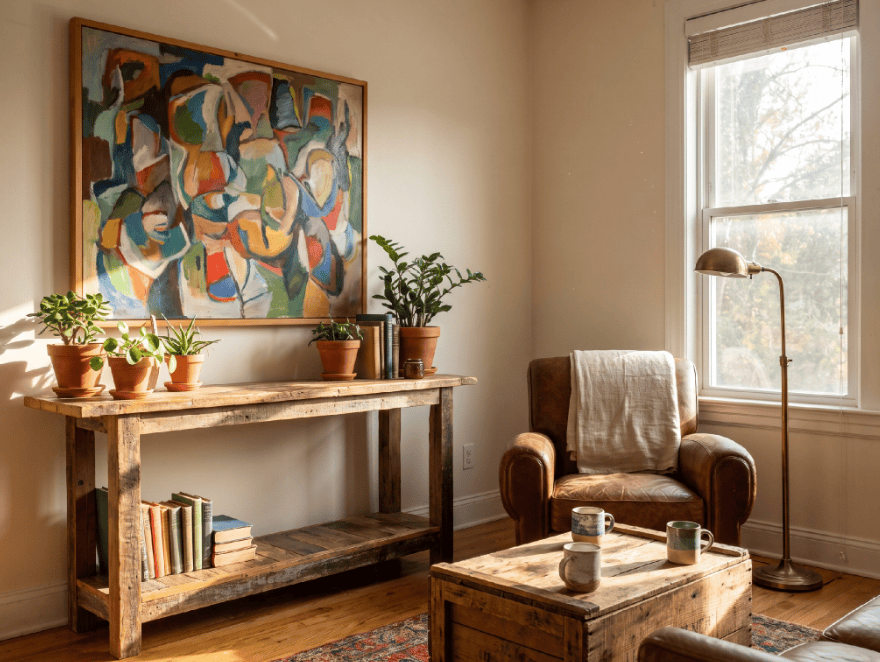
Original art brings something deeply personal to an upcycled home. Refinished furniture, vintage textiles and reclaimed materials already carry history, so the artwork on the walls should feel equally thoughtful. Instead of finishing the room with a generic print, choosing a piece made by an artist adds another layer of creativity and human connection. It can turn a beautifully styled space into one that genuinely feels like yours.
Why Original Art Belongs in an Upcycled Home
An upcycled home rarely comes together in a single shopping trip. It evolves slowly as you refinish old furniture, inherit meaningful objects and discover secondhand pieces that deserve another chapter. That gradual process gives the room depth.
Artwork can support that story or interrupt it. A mass-produced print may fill an empty wall, but it does not always have the same presence as the pieces surrounding it. In contrast, an original painting carries visible evidence of its creation. Brushstrokes, texture and small variations remind you that a person made it.
That individuality feels particularly at home beside furniture that has also been repaired, transformed or preserved. Both choices celebrate character over uniformity and creativity over convenience.
Choosing Original Art You Will Keep
Sustainable decorating is not simply about buying items labelled eco friendly. It is also about choosing things carefully enough that you will want to live with them for years.
Before buying original art, pay attention to your emotional response rather than trying to match every colour in the room. A piece does not need to coordinate perfectly with the sofa. However, it should create a feeling that you want to return to.
Consider the mood of the room, the available light and the amount of visual energy already present. A colourful abstract painting can animate a quiet, neutral space. Meanwhile, a softer landscape or restrained composition can bring balance to a room filled with patterned textiles and collected objects.
Scale matters too. One substantial painting can give a living room a clear focal point, while several smaller works can make a hallway or reading corner feel intimate. Taking measurements and marking the dimensions with painter’s tape can help you understand how a piece will occupy the wall before committing.
Look Beyond the Surface
When shopping online, confirm whether you are looking at a genuine painting or a reproduction. Words such as “artwork” and “artist designed” do not necessarily mean that the item was painted by hand.
Look for information about the artist, materials and creative process. Close-up photographs can reveal texture and brushwork, while clear dimensions help prevent surprises when the piece arrives. It is also worth reviewing framing details and return policies, particularly when choosing a large work you have not seen in person.
For example, Art by Maudsch offers hand-painted pieces in oil and acrylic. This type of artwork has the variation and tactile quality that works naturally alongside vintage and upcycled furnishings. When you choose something with lasting personal appeal, it is less likely to be replaced as trends change.
Pair Artwork With Upcycled Details
The way a piece is displayed can make its connection to the room even stronger. An old wood frame can be stripped, repaired or painted to complement a contemporary canvas. Salvaged picture ledges can display smaller works without requiring a permanent gallery wall. Even leftover paint from a furniture project can give mismatched frames a more unified appearance.
However, not every frame needs to match. Combining different woods, finishes and eras often feels more natural in a collected home. The key is to repeat one or two elements, such as warm wood tones or slim black edges, so the arrangement still feels intentional.
Paintings can also sit comfortably beside your own creations. Family photographs, children’s drawings, textiles and handmade objects all add personality. Our DIY wall art projects offer more ideas for turning familiar or discarded materials into something worthy of display.
Image: A layered gallery wall combining a hand-painted canvas, personal photographs and artwork framed in reclaimed wood.
Let Original Art Shape the Room
You do not need to find artwork only after every other part of the room is finished. Sometimes original art can become the starting point for the entire space.
Pulling one subtle colour from a painting into a cushion, lamp or refinished side table can create cohesion without making the room look overly coordinated. Similarly, the movement or texture within a piece might inspire the materials placed nearby. Rough ceramics, woven baskets and aged wood can all echo the tactile quality of painted canvas.
Most importantly, allow the arrangement to evolve. Move pieces between rooms, lean artwork on a shelf before hanging it and experiment with unexpected combinations. An upcycled home is never truly finished. Its character comes from being adjusted and reimagined as your life changes.
Make Space for Meaning
The most memorable homes are not necessarily the ones filled with the newest or most expensive things. They are the ones that reveal something about the people living there.
Original art belongs in an upcycled home because both value creativity, individuality and longevity. One preserves the marks of the artist, while the other honours the history and potential of existing materials. Together, they create a home that feels layered rather than manufactured.
Choose artwork because it moves you, display it in a way that feels personal and give it room to become part of your home’s continuing story.
