
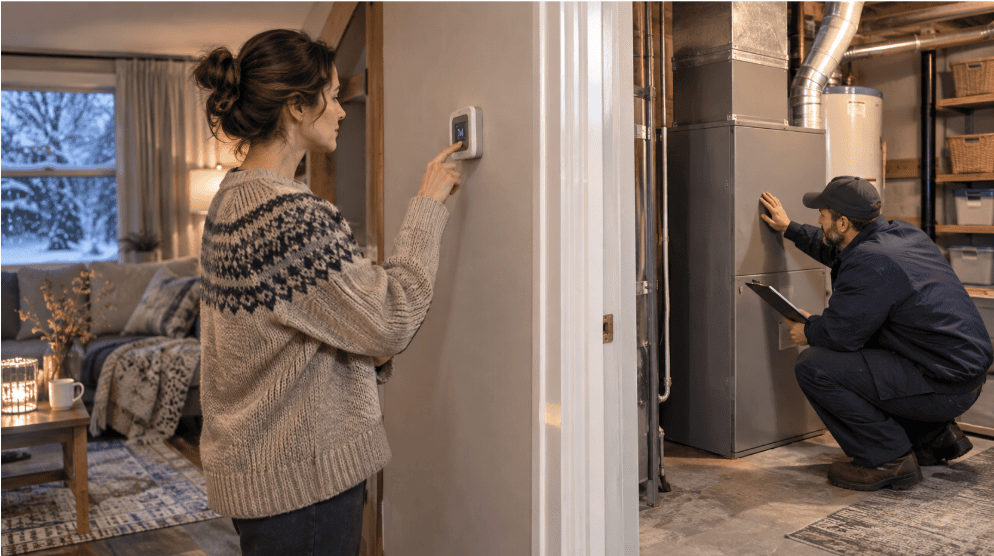
Emergency heating service repair starts with a simple question: is it safe to stay in the house? A blank thermostat on a mild afternoon might be an easy fix. The same problem during a hard freeze calls for a faster response, especially if the indoor temperature is dropping. Start with the safety signs, then work through the few checks you can make without opening up the equipment.
Emergency Heating Service Repair Starts With a Safety Check
If you smell gas, get everyone outside immediately. Leave lights, switches, and electronics alone, and wait until you’re well away from the building to call 911 and your gas utility’s emergency number. If a carbon monoxide alarm sounds, or you see smoke or sparks at the heating equipment, leave and call 911 from outside. Wait for emergency responders to clear the home before going back in.
Carbon monoxide has no smell, and exposure can cause headaches, dizziness, nausea, or confusion. If you suspect exposure, move into fresh air immediately and tell the dispatcher about anyone with symptoms. Seek prompt medical attention for anyone affected. A strong electrical burning smell also warrants stopping all troubleshooting.
Four Checks Before Calling for Emergency Heating Service Repair
Once you’ve ruled out immediate danger, start with the controls you use every day. A thermostat setting can change without anyone noticing, particularly after a power outage. A filter or vent may also be overdue for a quick look. Keep the checks to equipment you can safely reach and operate.
- Thermostat. Set it to HEAT and raise the target a few degrees above room temperature. If the display is blank and your thermostat uses replaceable batteries, try fresh ones.
- Power. See whether lights and other appliances are working. Check the furnace’s external power switch and look for a tripped breaker if the panel is dry and safely accessible. If the breaker trips again after a reset, leave it off and call a professional.
- Filter. If your system has a user-accessible filter, follow the manual to shut the unit off and check it. Replace a dirty disposable filter with the size and type the manufacturer specifies.
- Airflow. Open supply registers and move furniture, rugs, or baskets away from return grilles. Give the system several minutes to respond after a thermostat adjustment.
What Your Heating System Is Telling You
A completely silent unit gives a technician a different starting point from one that starts and shuts down within a minute. If the vents blow cool air, note whether the thermostat fan is set to ON, which can keep air moving between heating cycles. Heat pump airflow can also feel cooler than furnace airflow, so check whether the room temperature is actually rising. If only one room stays cold, note which one and whether the register is open.
Record any visible error code or take a photo of the display. If the unit keeps shutting down, makes a loud unfamiliar noise, or has water pooling near electrical components, stop running it and arrange service. Leave equipment panels closed and stay clear of wet electrical areas. In Manasquan, residents looking for Furnace repair Manasquan, NJ can describe these symptoms when they call to schedule a visit.
When to Request Emergency Heating Service Repair
Call for expedited service if the indoor temperature keeps dropping and your system can’t maintain heat. That’s especially important when infants, older adults, or people with health conditions are at home. If the house is getting too cold to stay comfortably, arrange somewhere warm to wait for the repair. During a prolonged freeze, follow local guidance on protecting pipes.
If you use an electric space heater while you wait, plug it directly into a wall outlet. Keep it at least three feet from bedding, curtains, and furniture, and turn it off before leaving the room or going to sleep. Keep grills and generators outdoors, and use your gas oven only for cooking.
When you call, have your address, current indoor temperature, equipment type, and any error code handy. Describe what happened in order, including any power outage, unusual noise, or water damage you noticed. Mention the checks you’ve already made and whether anyone in the household is especially vulnerable to cold. Ask for the earliest arrival time and what the diagnostic or after-hours fee covers.
Keep a Repairable Heating System in Service
Once the heat is back, ask what failed and whether the rest of the system is in sound condition. Replacing one worn component can keep a serviceable unit in use and avoid discarding equipment with years left in it. If breakdowns keep coming, compare the cost and expected life of another repair with a replacement. Upcycle That’s guide to heat pump replacement costs walks through that decision.
Check your filter regularly during heating season and clean or replace it according to the manufacturer’s instructions. Keep storage clear of vents and equipment, and save the model number and service history somewhere you can find them. The CDC recommends annual service for fuel-burning heating equipment and working carbon monoxide alarms. That maintenance gives a technician a chance to catch developing problems before the next cold snap.
