
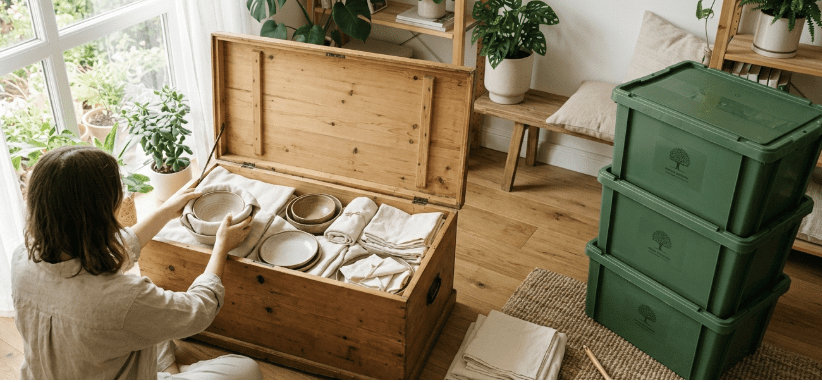
Zero-waste moving flips the script on how people relocate. Instead of buying stacks of boxes and wrapping everything in plastic, you use what you already have and cut the excess. Most moves generate a surprising amount of waste before you even unpack. This approach does the opposite. It reduces what you bring, how you pack, and what you throw away, so your new space starts clean, not cluttered.
What Zero Waste Moving Actually Looks Like
Zero-waste moving is not about perfection. It is about making better decisions at each step. Start by questioning what actually needs to come with you. The less you move, the less you need to pack, protect, and transport.
Think of it as a reset. If something does not serve your next space, it likely does not need to come. This mindset alone cuts down the majority of unnecessary packing and prevents you from carrying clutter forward.
Start With Decluttering, Not Packing
Packing everything and sorting later is the fastest way to create waste. Instead, begin with a solid decluttering of your belongings. Go room by room and separate items into keep, donate, sell, or recycle.
This step does most of the heavy lifting. Furniture, clothing, and household goods often have a second life if you let them go early. Scheduling donation pickups ahead of time keeps things moving and prevents last-minute dumping. Fewer items mean fewer boxes, fewer materials, and a simpler move overall.
When you choose an affordable moving company that prioritizes efficiency, you can further reduce your footprint by ensuring the truck is packed tightly. Proper stacking prevents shifting, which often leads to broken items and more waste. You should also look into your kitchen and linen closets for packing materials.
Smarter Packing Without the Waste
Packing is where most moving waste is created, but it is also where you have the most control. Skip the bubble wrap and look around your home first.
Before you buy anything new, use what you already have:
- Towels and blankets protect fragile items
- Socks cushion glassware and small breakables
- Suitcases carry heavy items like books or shoes
- Bins and baskets replace extra boxes
These swaps eliminate the need for single-use materials while keeping everything protected. If you still need boxes, source them secondhand through local groups or marketplaces. Better yet, rent reusable bins that can be returned once you are done. The goal is simple: everything you use for packing should either already exist in your home or continue to serve a purpose after the move.
Plan Early or Pay for It Later
Rushed moves create waste. When time is tight, convenience wins, and that usually means buying new materials and overpacking. Giving yourself a few weeks to plan properly changes everything.
Start early by organizing your timeline. Book donation pickups, gather reusable packing materials, and map out how you will pack each room. Many moving companies now offer digital inventories and virtual estimates, which reduces paper use and helps you avoid renting more space than you need.
A clear plan reduces stress and eliminates the need for last-minute decisions that lead to unnecessary waste.
Handle What’s Left Responsibly
Even with careful planning, some waste is unavoidable. The difference is how you handle it. Items like paint, cleaning chemicals, and electronics cannot go in regular trash and require proper disposal.
Check your local area for hazardous waste drop-off days or recycling centers that accept harder-to-process materials. Many facilities now take textiles, foam, and electronics that were once difficult to recycle.
Taking the time to sort these items properly ensures they are handled responsibly rather than ending up in a landfill.
Choose a Zero-Waste Moving Setup That Supports Efficiency
How your belongings are transported matters. A well-packed truck reduces shifting, which means fewer broken items and less need for replacements. Efficient loading also helps reduce the number of trips required, lowering fuel use.
If you are working with movers, communicate your zero-waste approach. Some companies offer reusable packing solutions or are open to working with your materials. Even small adjustments, like minimizing excess padding, can make a difference.
Why Zero-Waste Moving Works
Zero-waste moving is not just better for the environment. It makes the entire process more efficient.
You move less, spend less, and unpack faster. You avoid dealing with piles of cardboard, tape, and plastic once you arrive. Instead, you step into a space that already feels organized.
It also shifts how you think about your belongings. When you take the time to evaluate what you own, you naturally become more intentional about what you keep.
A Cleaner Start After Zero-Waste Moving
A move is a reset whether you plan for it or not. Zero-waste moving makes that reset intentional.
You arrive with what you actually need and nothing extra to deal with after. No clutter to sort through. No waste to clean up. Just a space that is ready to be lived in from day one.
