

Sustainable EV charging stations are becoming essential for modern properties, but the smartest designs go beyond installing new infrastructure. By incorporating repurposed materials, businesses can reduce construction costs, minimize waste, and create visually distinctive spaces that resonate with eco-conscious users. As electric vehicle adoption accelerates, the opportunity is not just to build more chargers, but to build them better. That starts with rethinking what already exists on-site and turning it into something functional and beautiful. Instead of defaulting to new materials, forward-thinking projects treat existing resources as assets.
Image by Freepik
Why Sustainable EV Charging Stations Need Smarter Material Choices
The rise of electric vehicles has triggered a wave of construction across commercial, residential, and mixed-use properties. Every new charging station requires concrete pads, protective barriers, lighting, and wayfinding systems. These elements add up quickly in both cost and environmental impact. Choosing repurposed materials allows developers to reduce embodied carbon while also trimming project budgets. Old concrete slabs, steel guardrails, and lighting infrastructure often remain structurally sound and ready for reuse with minor adjustments.
This approach also sends a clear message to tenants and customers. Sustainable EV charging stations signal that a business is thinking beyond surface-level sustainability claims. Instead of simply installing chargers, it demonstrates a deeper commitment to circular design and resource efficiency. That kind of authenticity carries weight in today’s market.
Designing Sustainable EV Charging Stations with Repurposed Materials
Every successful project begins with a balance between creativity and practicality. Safety, accessibility, and compliance come first, especially when working with electrical systems. Once those fundamentals are in place, repurposed materials can be integrated into nearly every part of the design. Existing curbs can become wheel stops, while reclaimed steel can act as protective barriers around charging units. Old conduit and cable trays may also be reused if they meet current safety standards.
Early collaboration with installers and engineers makes a significant difference. Some initial discussions with EV charging station installers can make a significant difference. They are aware of where to recycle a slab and where new concrete will be required due to grounding a slab or equipment pads. This avoids costly redesigns later in the process. A clear inventory of available materials, along with dimensions and condition notes, helps streamline planning and approvals. When reuse is considered from the start, projects tend to move faster and with fewer surprises.
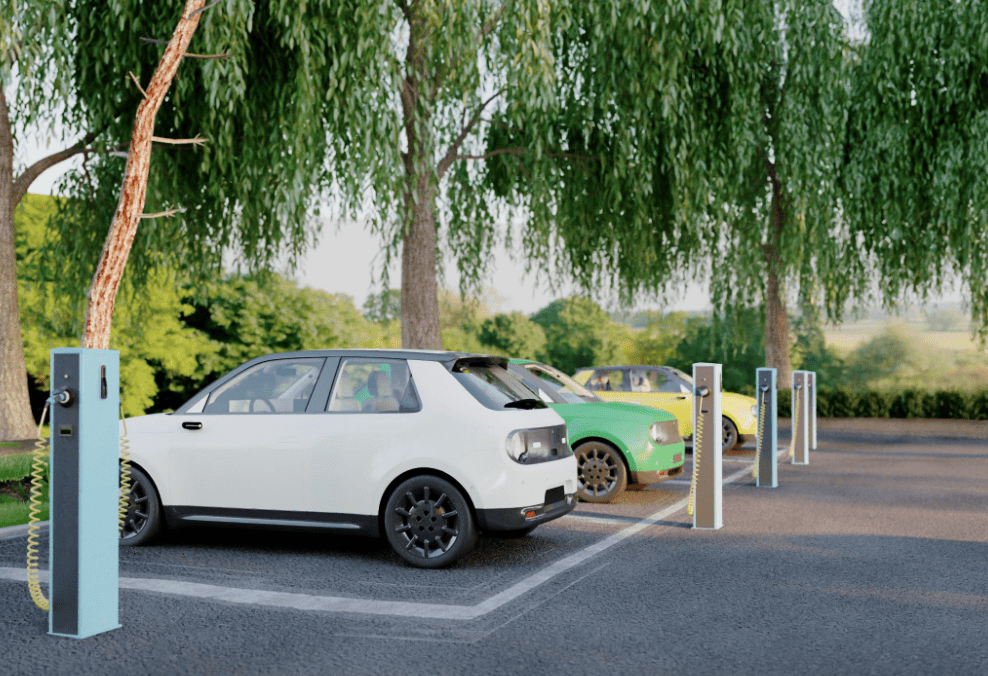 Image by Freepik
Creative Ways to Reuse Concrete, Steel, and Timber
Repurposed concrete offers one of the easiest wins in EV charging design. Instead of hauling away demolished slabs, many projects crush and reuse them as a base layer for new parking areas. This reduces hauling costs and lowers emissions tied to transportation. Saw-cut pieces can also serve as edging or wheel stops, creating a rugged and durable finish.
Steel elements bring both strength and flexibility. Old guardrails, pipe sections, and structural frames can be repurposed to protect charging stations from vehicle impact. With a fresh coat of paint, these elements can double as intentional design features rather than leftover industrial pieces. Timber adds warmth to an otherwise hardscape-heavy environment. Reclaimed beams or treated wood panels can soften the look of the space while maintaining durability when properly sealed.
Repurposed Canopies, Shelters, and Shade Structures
Shelters are where repurposed materials truly stand out. Existing canopy structures from loading docks or industrial sites can often be adapted to cover EV charging rows. With proper structural assessment, these frames can support new roofing materials or even future solar panel installations. This approach reduces the need for new steel while creating a cohesive and functional design.
Reclaimed roofing panels and polycarbonate sheets can also be reused to provide weather protection. Some projects integrate drainage systems into these structures, capturing rainwater for nearby landscaping. This adds another layer of sustainability without significant additional cost. The result is a space that feels intentional, not improvised.
Improving User Experience with Reclaimed Materials
Drivers often spend 20 to 40 minutes at charging stations, which creates an opportunity to enhance comfort. Repurposed materials can be used to build seating, planters, and small gathering areas that improve the overall experience. Cable spools, pallet wood, and old shelving units can be transformed into durable benches with minimal effort. These additions make the space more inviting while reinforcing the sustainability message.
Lighting upgrades also play a key role. Retrofitting existing poles with LED fixtures reduces energy consumption and improves visibility. Reusing the poles themselves avoids unnecessary demolition and installation work. Even small details, like planters made from concrete pipes or scrap metal, contribute to a more thoughtful and cohesive environment.
Real-World Examples of Sustainable EV Charging Stations Using Reclaimed Elements
Many successful projects demonstrate how effective this approach can be. Retail parking lots have reused existing concrete and curbs to create EV bays while upgrading only essential components. This has reduced material costs and shortened construction timelines. Corporate campuses have transformed old loading docks into charging hubs by repurposing guardrails, canopy steel, and structural elements already on-site. According to the U.S. Department of Energy, a retrofit of lighting with LEDs can lead to a reduction in lighting energy consumption by half or more, which goes well with a renewable-focused approach.
Residential developments have taken a more user-focused approach. By incorporating reclaimed seating, pergolas, and planters, they have created small community spaces around charging areas. These designs encourage longer use and improve tenant satisfaction. In each case, the common thread is simple: reuse what you have before sourcing something new.
 Image by vwalakte on Freepik
Risk Management: When to Use New vs Reused Materials
Repurposing materials requires clear boundaries. Structural and electrical components must meet current safety standards without compromise. If the condition or rating of a material is uncertain, replacement is the smarter choice. This is especially important for load-bearing structures and electrical systems, where failure carries real risk.
A balanced approach works best. New components can handle critical infrastructure, while repurposed materials enhance the surrounding environment. Regular inspections ensure that reused elements remain safe over time. With proper planning, reuse becomes an advantage rather than a liability.
How to Start a Sustainable EV Charging Station Project
The best way to begin is with a site walkthrough. Identify materials that can be reused, from concrete and steel to lighting and signage. Document their condition and dimensions, then involve your design and installation team early. Starting with a small pilot project allows you to test ideas, gather feedback, and refine the approach before scaling.
Sustainable EV charging stations do not require complex systems to get started. They require a shift in mindset. By viewing existing materials as opportunities instead of waste, businesses can create charging spaces that are cost-effective, functional, and visually compelling. The result is infrastructure that supports the future of transportation while respecting the resources we already have.

working on a sustainable ev design for major municipality and need efficient ideas to include in final design package.