
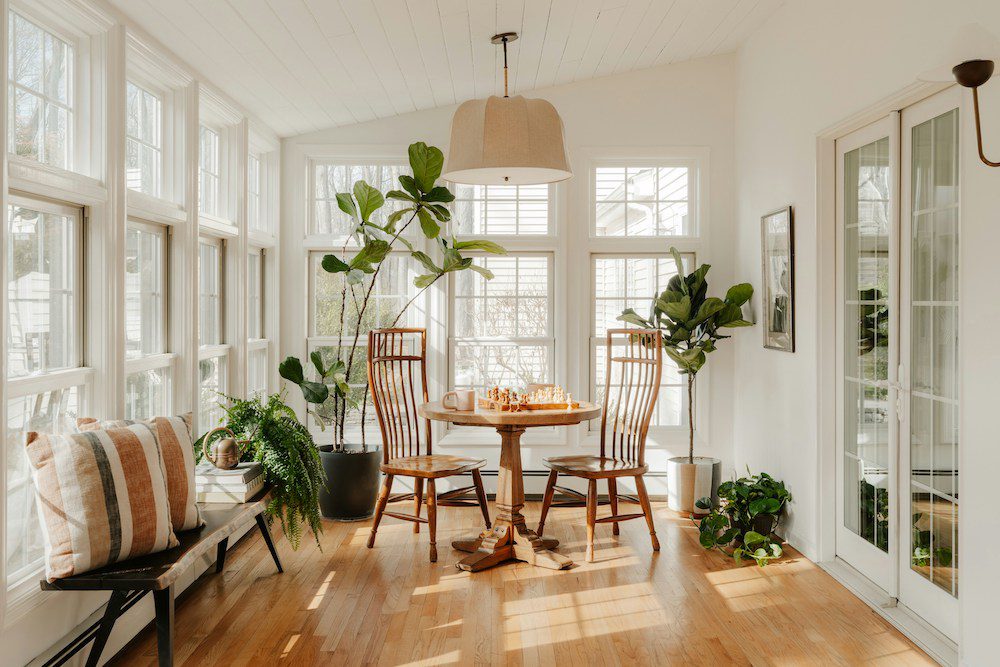
Adding a sunroom starts with a question you can answer before you look at a single window: do you want somewhere to eat dinner in October or somewhere to drink your coffee in January? Picture the windows open on a mild fall evening, or snow collecting outside while you sit barefoot with your mug. How you want to use the room will shape everything from the roof to the floor. And if you already have a porch or patio, part of the project may be right under your feet.
Adding a Sunroom for Three Seasons or Four
A three-season sunroom gives you a sheltered spot for meals, plants, and afternoons outdoors when the weather is mild. Closing the windows can keep out wind and rain, but the room typically sits outside the home’s heated and cooled space. How late into fall you can use it depends on your climate, the amount of sun it gets, and how comfortable you are in a sweater.
A four-season sunroom is designed to stay comfortable through winter and summer. That means planning the insulation, windows, heating, and cooling together. The floor matters too. A wall of beautiful windows will draw your eye, but you’ll notice a cold floor every time you walk in barefoot.
Among Kansas City sunroom builders, Horizon Exteriors offers both three-season and four-season rooms. Its approach illustrates how much of a sunroom decision happens below the windowsill. The company assesses the existing structure on site and describes building its sunrooms as permitted additions on frost-depth footings.
How Much Glass Do You Need?
Stand where you’d put your favorite chair and look out. A wall of glass makes sense if it faces a garden you love. A smaller window may do the job on the side that faces the neighbor’s driveway. An insulated wall there can also give you a place to put a cabinet, hang art, or set a bench without blocking the view.
Pay particular attention to where the afternoon light lands. A west-facing room can be lovely after dinner in October and uncomfortably hot at the same hour in July. Ask how an overhang, a shade tree, or exterior shading would change the room. If you like the idea of a glass roof, compare it with an insulated roof and generous windows. You may get the light you want with fewer worries about glare where you plan to sit.
Adding a Sunroom Over an Existing Deck or Patio
If you already have a porch or patio, have a contractor assess what’s there before you pay to tear it out. A sound slab or deck may be suitable for a screened porch or a lightweight glass enclosure. A conditioned addition can place different demands on the foundation. Ask what the existing structure can support and what would need to change if you wanted to enclose or heat the space later.
Even if the structure needs replacing, some of its materials may have another use. Sound boards with a known history could become the fronts of a storage bench or a surround for a freestanding planter. An old outdoor table can move inside, where a little repair might earn it another decade of lunches. Our guide to reusing salvaged wood explains what to look for before bringing old boards indoors.
When a Screened Porch Is All You Need
Think about what sends you inside on a pleasant evening. If it’s mosquitoes, screens may solve the problem while preserving the breeze you came outside for. If wind or rain regularly clears the dinner table, glass can make the space usable on more days. And if what you want is a quiet room for reading or working through the coldest months, the four-season option makes more sense.
Some enclosure systems allow you to swap screens for glass later. Ask which components could carry over and whether the footings would support a future upgrade. It’s worth getting that spelled out before you choose a system on the strength of what you might do with it someday.
What to Check Before Adding a Sunroom
The drawings should show how the new roof joins the existing wall and where rainwater goes when it comes off the roof. Ask the builder to walk you through that junction and explain how the room accounts for local conditions such as hail, wind, or frost. You’ll also want to know who handles permits and any homeowners association review before materials are ordered.
For a few more weeks of dinners outside, the porch you already have may be the best place to begin. If you keep coming back to that snowy morning with a cup of coffee, ask how the floor will stay warm and where you can sit without feeling a draft. Those details will make the room worth using long after the novelty of the view wears off.
