
Upcycling old textbooks is one of those ideas that sounds clever at first and then turns out to be genuinely useful. Textbooks are bulky, outdated fast, and rarely worth reselling, yet they’re built to last. Thick pages, rigid spines, and durable covers give them a built-in structure that’s perfect for hidden storage and functional decor.
With a few basic tools, an old biology book can become a secret storage box, a stack of novels can turn into a side table, and torn textbooks can become clean, graphic wall art. These projects don’t just look interesting — they solve real space problems in dorm rooms, apartments, home offices, and classrooms.
This guide walks through practical, beginner-friendly ways to turn unwanted textbooks into pieces that feel intentional, not crafty.

Why Upcycling Old Textbooks Works So Well
Textbooks are designed to survive years of heavy use. Their hard covers protect the contents, while hundreds of tightly bound pages create a solid block that can be carved, folded, sealed, or reinforced. Unlike thin paperbacks, textbooks hold their shape and can even support weight when used correctly.
Upcycling old textbooks also reduces clutter and keeps large volumes of paper out of landfill. Instead of storing unused books indefinitely or tossing them during a clean-out, you can turn them into items you actually use every day.
Students who care about the environment can also reduce waste in their study routine, not only in their decor projects. Instead of printing drafts, rewriting by hand, or burning through extra notebooks, they can use online academic support to keep materials use low.When deadlines pile up, it’s easy to overproduce paper while researching, outlining, and revising, especially during long debates about why homework is bad for student life and well-being.
If you’re working with school materials, make sure the books are truly unwanted. Keep current editions you may still need, and never cut into library or rental copies.
Tools and Materials You’ll Use Most Often When Upcycling Old Textbooks
Most textbook upcycling projects use the same core supplies. You may already have many of these at home.
- A sharp craft knife or box cutter with fresh blades
- A metal ruler and cutting mat
- Pencil, binder clips, and heavy books for pressing
- White glue or a Mod Podge-style sealer
- Paintbrush or foam brush
Optional extras include a hot glue gun, fabric scraps, decorative paper, or acrylic paint.
Safety note: thick page blocks require patience. Cut in shallow layers and keep your free hand well away from the blade path.
Project 1: Classic Hidden Storage Book Box
A hidden storage book box is the most popular entry point into upcycling old textbooks. It looks like a normal book on a shelf but opens to store small valuables like keys, cash, earbuds, or memory cards.
Start with a hardcover textbook that has a strong spine. Open the cover and decide how thick you want the “walls” of the box to be. Two to three centimetres usually looks clean and stays sturdy.
Clip the pages together, leaving the first page uncut if you want a neat liner. Draw a rectangle inside the page block using a ruler, then cut slowly in shallow passes. Once the cavity is complete, brush glue along the inner walls and outer page edges. Let it dry overnight under weight.
For a polished finish, line the inside with felt or fabric, or paint the cavity a matte neutral colour so it feels intentional.
Project 2: Magnetic Spine Storage for Quick Access
If you like the book-box idea but want smoother access, magnets are an easy upgrade.
Glue a thin magnet inside the front cover near the edge, then glue a matching magnet to the first page liner. The book will stay closed on the shelf but open easily when needed.
This works well for items you grab often, such as spare keys or SD cards.
Project 3: Hollow Book Charging Station
Dorm rooms and small desks tend to collect cables. A hollowed textbook can hide power banks, hubs, or charging bricks while keeping the surface tidy.
Create a standard book box, then cut a small notch in the page block for a charging cable. Reinforce the notch with extra glue so it doesn’t tear over time. Place the book near an outlet and route the cable inside.
Choose a thicker textbook so there’s enough depth for bulky adapters.
Project 4: Textbook Stack Side Table With Hidden Storage
A stack of textbooks can become a compact side table with a secret compartment.
Pick five to eight books of similar size for stability. Turn one of the middle books into a hidden storage box. Glue the stack together only at the corners, not across the full surface, to reduce warping and weight.
Add a wooden board or sturdy tray on top as a tabletop. A belt strap or fabric band wrapped around the stack can give it a more modern look.
This works especially well beside a bed or couch in tight spaces.
Project 5: Book Planter Sleeve for Decorative Greenery
Because paper and moisture don’t mix, this project works best as a decorative sleeve rather than a true planter.
Seal the inside covers with several layers of glue or clear sealer. Place a plastic container or small pot inside the hollowed space, then add faux plants, dried flowers, or a jar for water-based stems.
Art or literature textbooks tend to suit this look better than technical science covers.

Make this upcycled book planter here.
Project 6: Folded Page Decor With a Clean Look
Folded book art can look impressive or messy depending on execution. Simpler shapes tend to look best.
Fold pages to form hearts, stars, initials, or basic geometric patterns while keeping the cover intact for contrast. Use light pencil guidelines and fold consistently.
Once finished, spray with a clear matte sealer to help the folds hold their shape.
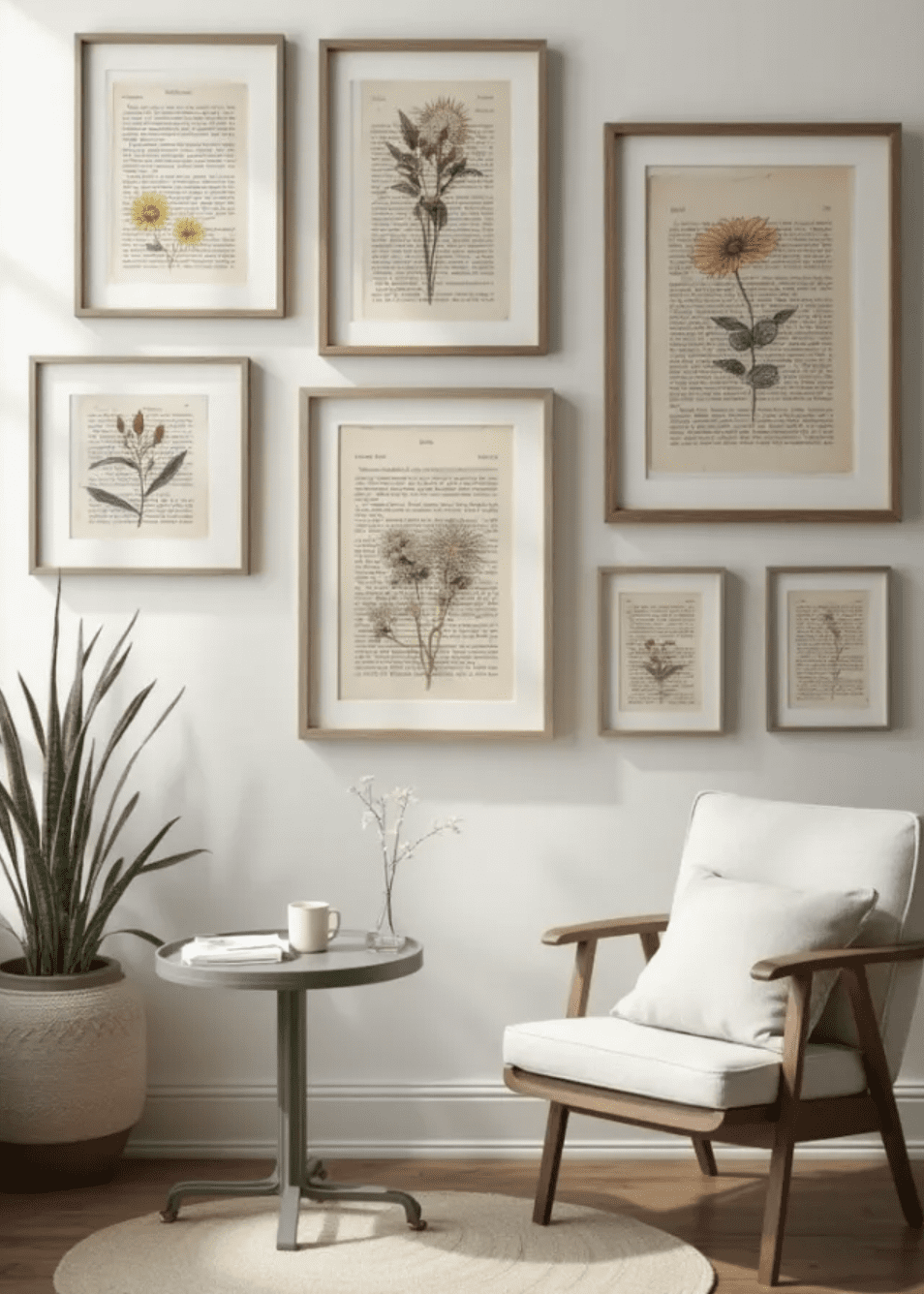
Project 7: Framed Textbook Pages as Wall Art
Many textbooks include diagrams, charts, or illustrations that work beautifully as wall decor.
Choose pages with clean layouts and minimal glare. Trim edges neatly or tear them softly for a more organic look. Mount them in simple frames or on clipboards.
A themed set — anatomy sketches, astronomy diagrams, language charts — looks especially good in study corners or home offices.
Project 8: Textbook Cover Tray for Everyday Use
Hardcover textbooks can become trays for desks or entryways.
Remove the page block carefully by cutting the inner hinge. Use the front and back covers as the tray base. Add low wooden strips or thick cardboard around the edges, then cover or paint the surface for a finished look.
It’s a great catch-all for keys, coins, or stationery that doesn’t add visual clutter.
How to Make Upcycling Old Textbooks Look Intentional
The difference between “DIY” and “designed” is usually in the finishing.
Seal exposed page edges with glue or paint for a clean block look. Stick to a consistent colour palette that matches your room. Measure carefully and replace blades often to keep cuts sharp.
Adding texture helps too. Linen fabric, faux leather, or kraft paper can instantly elevate the final result. Even a minimalist spine label can make the piece feel curated instead of improvised.
Where to Find Safe Books to Upcycle
You don’t need rare or collectible editions. Look for books that are already damaged or outdated.
- Your own old coursework
- Library discard sales
- Thrift stores and charity shops
- Campus free shelves or swap groups
- Friends who are clearing storage
Avoid cutting into books that may still have resale value, especially newer editions.
Upcycling Old Textbooks: Conclusion
Upcycling old textbooks is a practical way to reduce clutter while creating storage and decor that blends seamlessly into your space. A single hardcover can become a hidden box, a cable-hiding charging station, or a clean tray for everyday essentials. A stack can turn into furniture, and individual pages can become wall art with real personality.
Choose one project that solves a problem you actually have. Start simple, focus on clean finishing, and let those old textbooks earn their place again — this time as functional, thoughtful decor.

Kristian Eide
Kristian Eide holds a Ph.D. in Educational Sciences and serves as an expert for PapersOwl. He focuses on deconstructing complex academic procedures, making them straightforward and accessible for readers of all levels.