
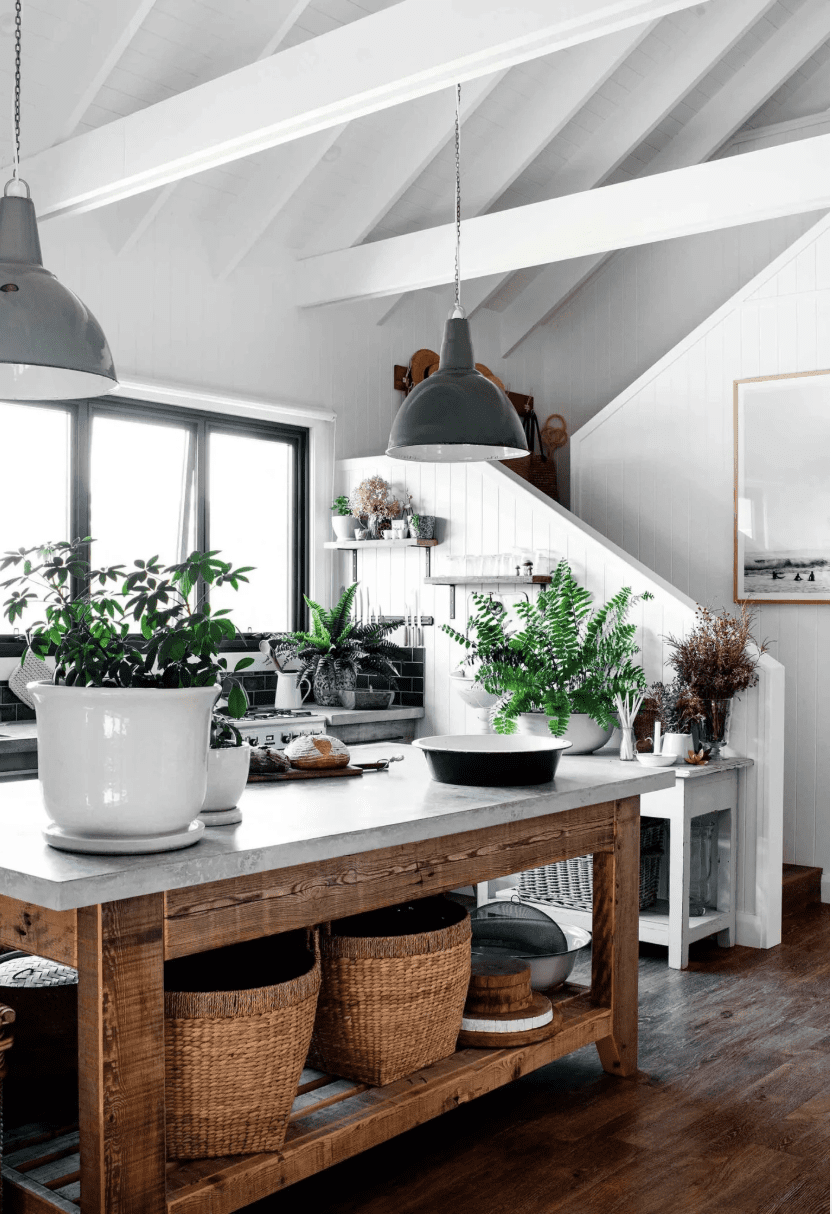
Reclaimed timber beams bring a sense of history, texture, and architectural depth that new materials rarely replicate. Whether you’re renovating or building from scratch, these beams introduce warmth and character while anchoring a space with intention. Used across ceilings, walls, or open-plan zones, they create dimension without relying on excessive ornamentation, making them a natural fit for both rustic and modern interiors.
Photography: Brigid Arnott | Styling: Hannah Brady
Beyond aesthetics, reclaimed materials reflect a more thoughtful approach to design. Instead of starting from scratch, you’re working with materials that already carry a story—refining them, repositioning them, and giving them new purpose in a contemporary space.
Sourcing Reclaimed Timber Beams
Finding quality reclaimed timber beams requires a balance between sourcing and discernment. Softwoods like pine and cedar offer a lighter, more adaptable finish, while hardwoods such as jarrah or spotted gum bring richness and durability. Both options can work beautifully depending on the look you’re aiming to achieve.
Specialized architectural salvage yards and timber suppliers remain the most reliable sources, but they often come at a premium. For a more cost-effective route, demolition sites, old barns, and even agricultural fencing can yield high-quality materials with minimal processing required. These sources often align more closely with the spirit of upcycling—less refinement, more authenticity.
2026 Design Trends with Reclaimed Timber Beams
In 2026, reclaimed timber beams are being used less as standalone features and more as part of larger architectural compositions. Grid layouts, truss-style installations, and layered ceiling designs are transforming overhead space into a focal point rather than an afterthought.
The aesthetic direction is split between two dominant styles. On one end, a Scandinavian-inspired palette favors lighter oak tones and clean lines. On the other, deeper hues like jarrah and chocolate-toned spotted gum create a more grounded, luxurious feel. Both approaches lean into natural textures, often paired with materials like stone, blackened steel, or brushed brass.
There is also a clear shift toward embracing imperfection. Designers are favoring matte or low-sheen finishes that highlight the timber’s natural wear, rather than sanding it down into uniformity. The result feels more lived-in, more honest, and ultimately more compelling.
Planning Your Installation
Before installing reclaimed timber beams, it’s important to determine whether the beam will serve a structural or purely decorative purpose. Structural beams require input from a qualified engineer, while decorative beams offer more flexibility in placement and installation.
Ceiling height plays a key role in the final outcome. Spaces with ceilings above three metres tend to accommodate beams more comfortably, allowing them to enhance rather than overwhelm the room. You’ll also need to account for existing electrical wiring, fixture placement, and the direction of ceiling joists to ensure proper anchoring.
If you’re unsure about proportions, a simple but effective approach is to create cardboard mock-ups. This allows you to test different beam sizes and placements before committing, helping you avoid costly adjustments later.
Finishes and Styling Options
One of the advantages of reclaimed timber beams is the range of finishes available without losing their original character. Natural oils can enhance the grain, while light sanding softens rough edges without erasing history. For a more dramatic effect, charring or staining can deepen tones and add contrast.
Texture also plays a defining role. Wire-brushed, rough-sawn, and weathered finishes each create a different visual impact, allowing you to tailor the beams to your interior style. Whether you’re aiming for refined minimalism or something more industrial, the finish you choose will shape how the beams interact with the rest of the space.
Placement: Vertical vs Horizontal
The orientation of reclaimed timber beams can subtly shift how a room feels. Vertical placement draws the eye upward, making ceilings appear higher and spaces more expansive. Horizontal placement, on the other hand, reinforces a more traditional and grounded aesthetic.
Looking at historical references, such as Tudor-style interiors, can offer inspiration for how beams were originally used. From there, you can reinterpret those ideas in a way that aligns with your own space and design preferences.
Creative Applications in Modern Spaces
Reclaimed timber beams offer a level of design versatility that extends well beyond ceilings. They can be used to define zones within open-plan layouts, frame architectural features, or even function as floating shelves and mantels.
In more contemporary settings, contrast becomes a powerful tool. Dark, rough-sawn beams against white plaster ceilings create a striking visual balance, especially when paired with minimalist furniture. For a more industrial approach, beams can also serve as mounting points for lighting fixtures, blending form and function in a seamless way.
This mix of influences—farmhouse, industrial, modern—reflects a broader trend toward layered, personalized interiors rather than rigid design categories.
Safety Considerations During Installation
Installing reclaimed timber beams is not just a design decision—it’s a physical one. These beams can weigh anywhere from 40 to 200 kilograms, making safe handling essential.
A stable working platform is critical. Ladders may be convenient, but they don’t provide the balance or support needed when positioning heavy, irregular materials. Utilizing a mobile scaffold hire allows you to lock in a secure base, adjust height as needed, and focus on precise alignment without compromising safety.
Cost-Saving Strategies for Reclaimed Timber Beams
While reclaimed timber beams can sometimes cost more than new timber due to labor and restoration, there are practical ways to reduce expenses without sacrificing quality.
Sourcing directly from demolition sites or rural properties often cuts out supplier markups. In some cases, local fire departments may have structures scheduled for controlled burns, offering an opportunity to salvage materials beforehand. These approaches not only lower costs but also stay true to the principles of upcycling—working with what already exists.
Before using any salvaged timber, it’s important to assess its condition carefully. Check for rot, pest damage, embedded nails, or chemical treatments that could affect usability. Once cleared, these materials can be transformed into something both functional and visually striking.
Upcycling Timber Beams as a Design Philosophy
At its core, using reclaimed timber beams is about more than aesthetics—it’s about rethinking how materials are used. Instead of defaulting to new resources, you’re extending the lifecycle of existing ones, reducing waste while creating something uniquely tailored to your space.
This approach aligns with a broader shift toward intentional design. Rather than chasing trends, it focuses on building spaces that feel grounded, personal, and enduring. When done well, reclaimed timber doesn’t just fill a space—it elevates it.
