
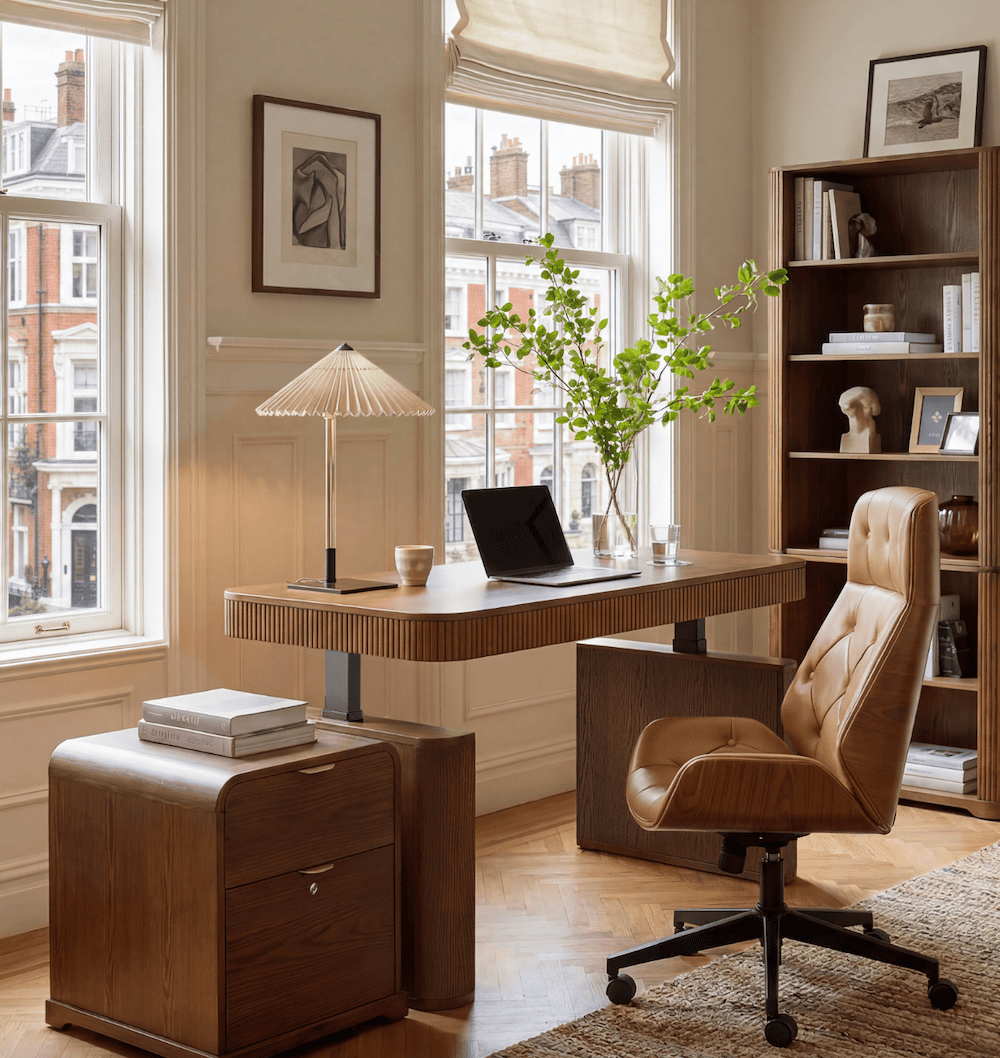
September is the perfect time to rethink your flexible home office as school and work schedules collide. New stationery, new routines, and changing schedules can quickly highlight just how much a shared desk gets used. If your home office has been doing double duty as a homework station, Zoom-call corner, and dumping ground for backpacks, a few thoughtful updates can make a big difference.
You don’t need to gut the room or replace everything you own. By reworking existing furniture, adding adaptable pieces, and creating better storage, you can turn a cramped, single-purpose setup into a flexible space that works for spreadsheets in the morning and science projects in the afternoon.
Why a Flexible Home Office Matters
The modern home office rarely belongs to just one person. Parents may be juggling work-from-home days, while kids need somewhere to do homework, study, or attend online lessons. By late afternoon, everyone can end up competing for the same desk space and power outlets.
Designing the room around flexibility rather than a fixed, single-user layout can solve many of these problems before they start. It can also help you get more use from furniture you already own instead of replacing your setup every time your household’s needs change.
Focus on:
- Adjustable furniture that suits different heights and tasks
- Modular storage that can be reorganized throughout the school year
- Multi-use surfaces that switch easily from laptop work to art projects or textbooks
- Existing furniture that can be repositioned, refinished, or repurposed for a new role
Start With an Adjustable Desk
The desk is the anchor of any home office, so it’s a logical place to start. A fixed-height desk works well for one person doing one kind of task. However, if the space needs to flex between an adult working a full day and a child doing an hour of homework, height adjustability can make a real difference.
A standing desk UK shoppers can adjust between sitting and standing offers more flexibility throughout the day. This can be useful for adults moving between focused work and calls, as well as taller teenagers who may have outgrown the desk they used a few years ago.
If you’re upgrading, look for:
- A smooth, quiet motor, particularly if calls or online lessons happen nearby
- A suitable minimum height for the people who will regularly use the desk
- A sturdy frame that won’t wobble under a laptop, monitor, books, and other supplies
Before discarding an old desk, consider whether it can take on another role. A fixed desk that no longer works as the primary workstation might become a craft table, printer station, or dedicated homework surface elsewhere in the room.
Rethink Storage Before You Rethink Decor
Before buying decorative pieces for your flexible home office, take stock of what’s actually cluttering the current setup. Loose chargers, old worksheets, unused notebooks, and a collection of dried-out pens are often the real problem, not the size of the room.
Start by sorting what you already have. Repurpose jars for pens, refresh old boxes with paint or leftover wallpaper, or turn an unused shelf into a school-supply station. These small upcycling projects can improve organization without adding more new items to the room.
A few storage strategies can go a long way:
- Vertical storage, such as wall shelves and pegboards, frees up desk space without using valuable floor space.
- Labelled bins or trays make it easier for kids to grab and put away their own supplies.
- A rolling cart can hold shared items like printer paper, chargers, or art supplies and move between rooms when needed.
- Reused containers can organize smaller supplies while keeping useful materials out of the waste stream.
Create Zones in Your Flexible Home Office
If the office needs to serve more than one person, even a small room can benefit from being divided into loose zones. Instead of asking one central desk to handle every activity, give different parts of the room specific jobs.
Create a focus zone around the main desk with good lighting and minimal visual clutter. Then add a flex zone using a smaller table, repurposed side table, floor cushion, or even an armchair and clipboard for reading and quick homework sessions.
Finally, establish a charging and supply zone in a corner or on a shelf. Keeping cables, stationery, and shared technology away from the main work surface makes it easier to reset the room between users.
This type of zoning can allow two people to share the same room without constantly competing for the same few feet of desk space.
Improve Lighting and Comfort
Furniture isn’t the only part of a successful study space. Light quality can affect how comfortable it feels to work or study, especially as daylight hours get shorter in autumn.
A desk lamp with adjustable brightness is a simple upgrade that can be moved depending on who’s using the space. Position it carefully to reduce screen glare and provide enough task lighting for reading, writing, or detailed projects.
Comfort matters too. If adults and children share the same workstation, look for seating that can be adjusted rather than buying a chair suited to only one person. You can also repurpose cushions or add a footrest to make existing seating work better for different users.
Make the Space Easy to Reset
The most successful flexible spaces aren’t necessarily the biggest. They’re the ones that can change roles quickly.
Give frequently used items a clear home so the desk can transition from work to homework without a major cleanup. A laptop stand that can be stored away, labelled trays for each family member, and portable supply containers can make the switch much easier.
At the end of each work or study session, encourage a quick reset. Returning chargers, papers, and supplies to their designated spots keeps yesterday’s clutter from becoming tomorrow’s problem.
Bringing Your Flexible Home Office Together
A flexible home office doesn’t require an expensive renovation. The goal is to create a room where furniture, storage, and work surfaces can adapt as the day and school term change.
Start by making the most of what you already own. Repurpose furniture where possible, clear unnecessary clutter, and identify the areas where an upgrade would genuinely improve how the office functions. An adjustable desk can provide a versatile foundation, while modular storage and clearly defined zones help the rest of the space work harder.
With a few thoughtful changes, your back-to-school refresh can create a study and work space that adapts to the whole household rather than needing another makeover when routines change again.
