
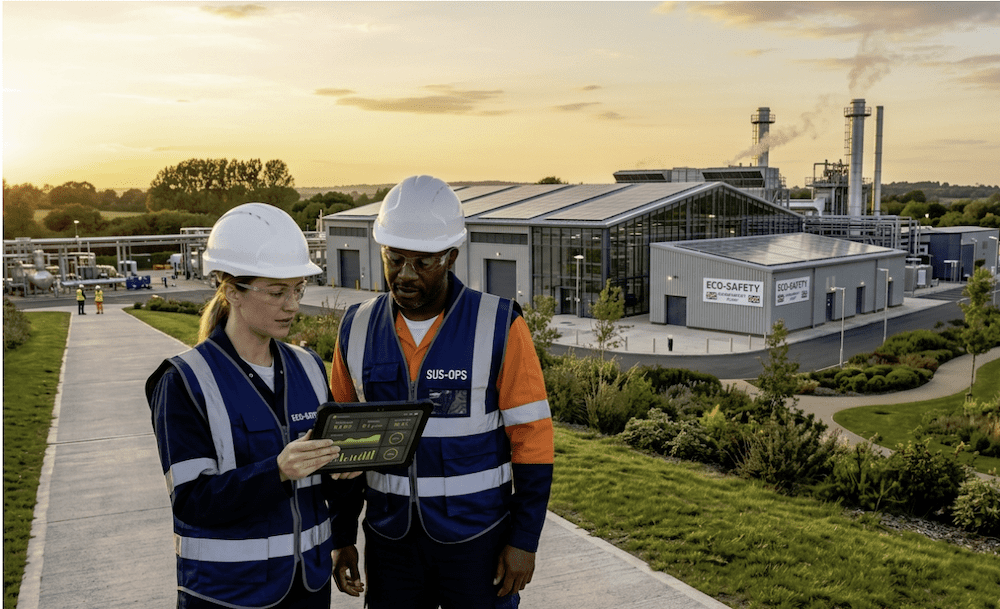
Industrial safety and sustainability are becoming increasingly connected as businesses rethink what it means to operate responsibly. Sustainability is no longer limited to reducing emissions or improving recycling programs. It also includes protecting employees, preventing environmental damage, and creating resilient operations that can continue serving communities for decades.
More than two million workplace accidents occur every year, demonstrating that worker safety remains a significant challenge across many industries. A single industrial incident can harm employees, disrupt local economies, damage ecosystems, and undo years of environmental progress. Companies that want to build a genuinely sustainable future must treat industrial safety and sustainability as an essential part of their long-term strategy.
Why Industrial Safety and Sustainability Belong Together
Sustainability is about protecting resources for future generations, and no resource is more valuable than people. Employees keep businesses operating, develop new ideas, and maintain essential infrastructure. When organizations fail to protect their workforce, they undermine every other sustainability initiative they promote.
Safe operations also reduce waste in many forms. Major accidents often result in damaged equipment, production downtime, emergency clean-up, material loss, and increased energy consumption during rebuilding efforts. Preventing these incidents conserves financial, environmental, and human resources simultaneously.
A strong safety culture also builds trust among employees, customers, investors, and surrounding communities. That trust is increasingly valuable as organizations face greater scrutiny regarding their environmental, social, and governance (ESG) commitments.
Industrial Safety and Sustainability: Corporate Responsibility Extends Beyond Emissions
Many sustainability programs initially focused on lowering carbon emissions and reducing waste. While these goals remain important, the social component of ESG now receives far greater attention.
Modern stakeholders expect organizations to demonstrate that they protect workers, maintain ethical supply chains, and create healthy workplaces. Physical safety and employee wellbeing are now recognized as core sustainability indicators rather than separate compliance issues.
When proper safety procedures are ignored, the consequences can be devastating for workers and their families. Those affected by catastrophic industrial failures may need to learn about your plant accident claim to better understand the legal options available following a serious workplace incident.
Beyond personal injury, industrial disasters frequently release hazardous materials into nearby ecosystems, contaminate soil, and threaten local water tables. Environmental damage on this scale can erase years of conservation work and severely damage a company’s public reputation.
Industrial Safety and Sustainability Prevention Supports Long-Term Sustainability
The most sustainable organizations invest heavily in preventing incidents before they occur. Rather than reacting to accidents, they monitor equipment performance, maintain infrastructure, and continually improve operational procedures.
Preventative maintenance offers several sustainability benefits:
- Extends the lifespan of expensive equipment.
- Reduces unnecessary material waste.
- Minimizes emergency repairs and production downtime.
- Lowers the likelihood of environmental contamination.
- Protects employees from avoidable hazards.
- Supports consistent regulatory compliance.
Many industrial facilities now use predictive maintenance systems, sensors, and digital monitoring platforms that identify equipment deterioration long before failure occurs. These technologies improve operational efficiency while reducing both safety and environmental risks.
Green Transitions Introduce New Workplace Challenges
Many industries are rapidly modernizing to reduce emissions and improve efficiency. However, adopting cleaner technologies also introduces unfamiliar workplace hazards.
Projects involving renewable energy integration, hydrogen storage, battery manufacturing, and advanced electrical infrastructure require updated safety procedures alongside environmental planning. Existing protocols may not adequately address the risks associated with emerging technologies.
Organizations should prepare for these changes by:
- Developing specialized training programs for new technologies.
- Updating emergency response procedures.
- Installing real-time monitoring systems.
- Regularly reviewing infrastructure condition.
- Reporting near-miss incidents transparently.
- Continuously evaluating evolving operational risks.
Successfully balancing environmental innovation with worker protection allows organizations to modernize without compromising employee safety.
Operational Resilience Creates Lasting Value
Resilient organizations understand that sustainability depends on stable operations. Facilities that experience repeated shutdowns, accidents, or equipment failures consume more resources than those operating safely and efficiently.
Operational resilience strengthens sustainability by:
- Protecting workers and surrounding communities.
- Reducing insurance and legal costs.
- Preventing environmental contamination.
- Improving investor confidence.
- Maintaining customer trust.
- Supporting long-term business continuity.
Safety investments often produce measurable financial returns by preventing costly disruptions while reinforcing broader sustainability objectives.
Safety Is a Competitive Advantage
Businesses increasingly compete on their sustainability performance. Investors, regulators, insurers, employees, and customers all examine how organizations manage operational risk alongside environmental commitments.
Companies with strong safety records typically experience:
- Higher employee retention.
- Lower compensation claims.
- Greater operational efficiency.
- Improved ESG performance.
- Stronger stakeholder confidence.
- Better long-term financial stability.
Viewing safety as a strategic investment rather than a regulatory burden helps organizations remain competitive while building more sustainable operations.
Building a Sustainable Industrial Future
Industrial safety and sustainability cannot be separated. Protecting employees, preventing environmental harm, and maintaining reliable operations all contribute to the same long-term objective: creating businesses that can thrive responsibly for generations.
Organizations that invest in proactive safety programs not only reduce workplace injuries but also strengthen environmental stewardship, improve operational resilience, and build lasting trust with the communities they serve. As industries continue evolving toward cleaner technologies and higher ESG expectations, integrating safety into every sustainability decision will remain essential for long-term success.
