

Learning how to clean a sofa properly is essential before bringing any second-hand furniture into your home. Even if a thrifted couch looks clean at first glance, it can still hold dust, odors, allergens, and years of buildup hidden deep within the fabric. Giving it a proper deep clean helps the sofa feel fresh, comfortable, and ready for everyday use while extending its lifespan and keeping perfectly good furniture out of the landfill.
Second-hand furniture has become increasingly popular as more people embrace sustainable decorating and budget-friendly home styling. From vintage finds to marketplace bargains, pre-loved sofas can add warmth and personality to a space without the high cost of buying new. The key is making sure your new-to-you piece feels truly clean before settling it into your living room.
How to Clean a Sofa With a Thorough Vacuum
The first step in learning how to clean a sofa is removing as much loose dirt and debris as possible. Sofas naturally collect crumbs, dust, hair, and lint over time, especially in hidden areas beneath cushions and along seams. By prioritizing this step, you’re setting the stage for a successful transformation and reaping the upcycling benefits.
Use a vacuum with upholstery attachments to clean the entire surface carefully. Remove all cushions and vacuum underneath them thoroughly. A crevice attachment works especially well for tight corners and deep folds where dirt tends to build up unnoticed.
Take your time during this step because dry debris can turn muddy once moisture is added later in the cleaning process. A careful vacuuming session instantly improves both the appearance and freshness of the sofa.
Check the Upholstery Fabric Before Cleaning
Before using any cleaning solution, identify what type of upholstery you are working with. Different fabrics respond differently to moisture and cleaning products.
Many sofas include a cleaning tag with fabric care codes:
- W = water-based cleaners are safe
- S = solvent-based cleaners only
- WS = both are generally safe
- X = vacuum only
If the tag is missing, always test cleaning products on a small hidden area first. Delicate vintage fabrics can react unpredictably, and it is better to move cautiously than accidentally damage the upholstery.
Understanding the material also helps you decide whether a light surface clean is enough or if the sofa may need professional attention.
Remove Stains and Odors Naturally
One of the biggest concerns with second-hand furniture is lingering smells. Smoke, pets, food spills, and general age can all leave odors trapped inside the fabric.
Baking soda is one of the simplest and most effective natural deodorizers. Sprinkle it generously across the entire sofa and let it sit for several hours before vacuuming thoroughly. This helps absorb unwanted smells while refreshing the fabric naturally.
For stains, a mild mixture of dish soap and warm water works well for many upholstery types. Gently blot the stain using a microfiber cloth rather than scrubbing aggressively. Scrubbing can damage fibers and spread the stain further into the fabric.
A diluted white vinegar solution can also help neutralize odors while lifting stubborn marks. Lightly mist the area and blot carefully with a clean cloth. Once dry, the vinegar smell disappears while leaving the sofa noticeably fresher.
Easy DIY Sofa Cleaning Solutions
Using simple sofa cleaning hacks like baking soda and vinegar solutions can make a huge difference when restoring second-hand upholstery. Different cleaning methods work better for different problems. Here are a few simple options to try before reaching for harsh chemicals:
- Baking soda: absorbs odors and refreshes fabric naturally
- Dish soap + warm water: good for light stains and general spot cleaning
- White vinegar + water: helps neutralize odors and lift stubborn marks
- Steam cleaning: useful for deep sanitizing heavily used sofas
- Microfiber cloths: help blot stains gently without damaging fabric
How to Clean a Sofa With Steam
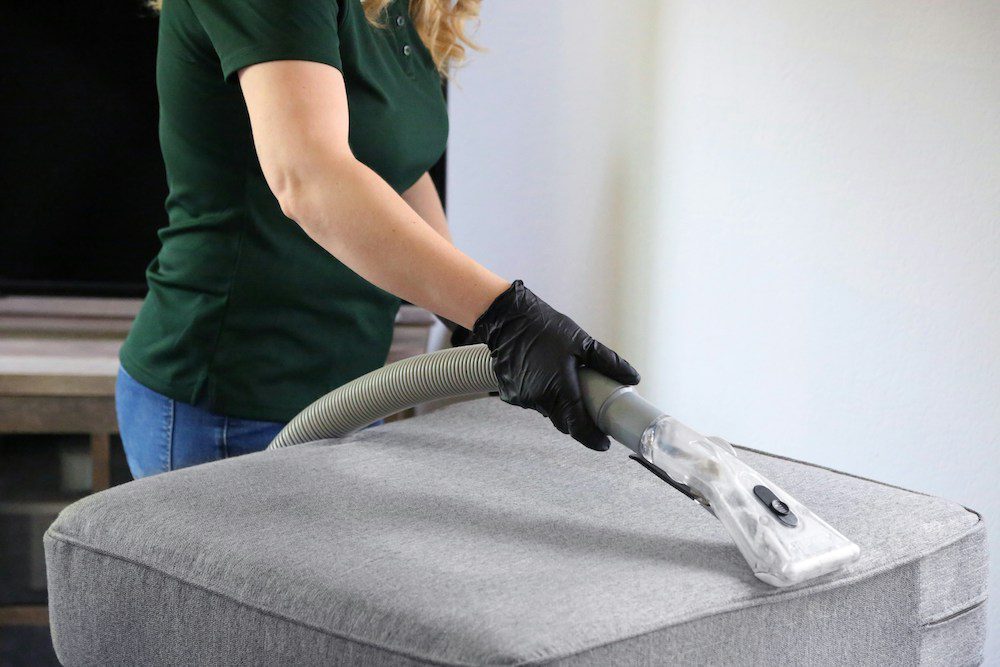
For heavily used sofas, steam cleaning can provide a deeper level of cleaning and sanitization. Steam helps loosen embedded dirt while reducing bacteria and allergens without relying heavily on chemicals.
However, steam cleaning is not suitable for every fabric. Some delicate upholstery materials may warp, shrink, or become damaged from excess heat or moisture. Always test a small section first and avoid soaking the cushions.
Good airflow is important after steam cleaning. Open windows or use fans to help the sofa dry completely and prevent damp smells from developing inside the cushions.
If the sofa has strong odors, visible staining, or signs of mold, professional upholstery cleaning may be the safest option.
Freshen and Protect the Sofa After Cleaning
Once the sofa is clean and fully dry, a few finishing touches can help it feel even more inviting. Fabric refresher sprays can add a clean scent without overpowering the room. Throw blankets and washable cushion covers are also practical ways to keep second-hand furniture feeling fresh over time.
If the sofa includes wooden legs or trim, a gentle furniture polish can help revive the finish and improve the overall appearance. Protective fabric sprays may also help guard against future spills and stains, especially in busy households with pets or children.
These small details make a big difference in helping second-hand furniture feel intentional rather than temporary.
How to Clean a Sofa for a More Sustainable Home
Understanding how to clean a sofa properly is one of the easiest ways to make sustainable decorating feel approachable. Instead of sending another piece of furniture to the landfill, you are giving an existing item a fresh start while creating a home that feels personal and lived-in.
A little effort can completely change how second-hand furniture feels in your space. With proper cleaning and regular maintenance, a thrifted sofa can remain comfortable, functional, and stylish for years to come.
