
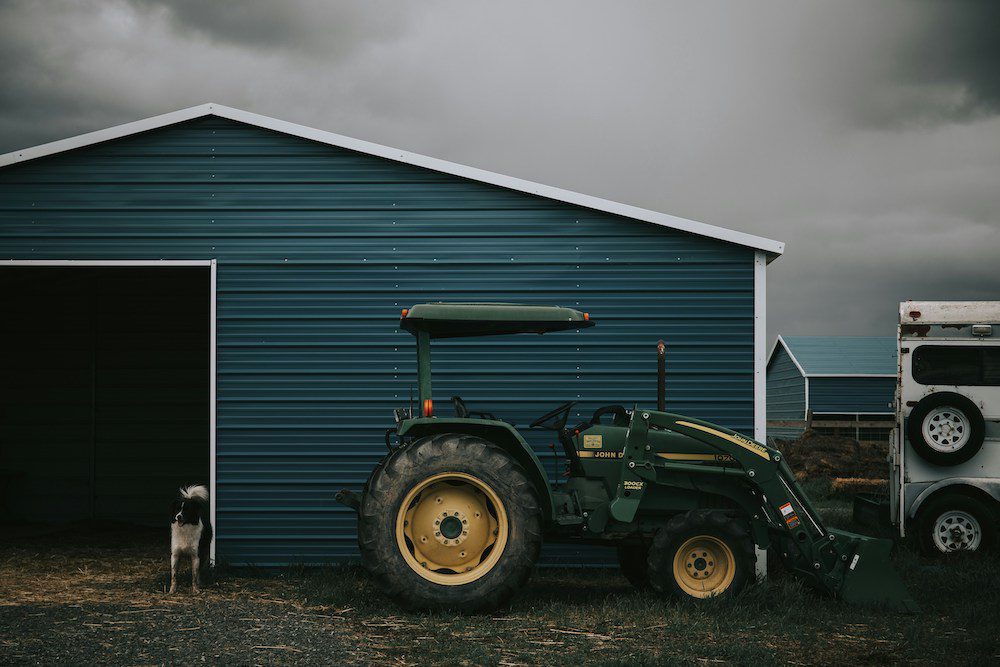
A farm shed is not a showpiece. It’s infrastructure. It holds your machinery, your feed, your repairs, your seasons. And once it’s up, it shapes how your land functions for decades.
So the real question isn’t just build or buy?
It’s: How do you add a farm shed without overbuilding, overspending, or creating future waste?
Understanding Your Farm Shed Before You Build
Before comparing options, step back.
What is this farm shed actually for?
- Machinery storage?
- Hay?
- A workshop?
- Livestock shelter?
- A mix of everything?
Too many rural structures are oversized “just in case.” That extra bay seems harmless — until it becomes unused space you paid for, roofed, and poured concrete under.
A sustainable farm shed starts with restraint. Build what your workflow needs, not what looks impressive on paper.
Building a Shed On Site: The Upcycle Advantage
If you want maximum flexibility, building your farm shed on site gives you room to think creatively.
This is where rural ingenuity shines.
Have timber from an old fence line?
Steel beams from a dismantled barn?
Corrugated sheets still structurally sound but cosmetically imperfect?
A custom build lets you integrate reclaimed materials intentionally — especially for non-load-bearing elements like internal walls, shelving, or partitioning.
Even concrete from a demolished pad can sometimes be crushed and reused as sub-base.
Yes, you’ll need engineering where structural integrity matters. But not every element of a farm shed needs to be brand-new.
Buying a Farm Shed Kit: When Simplicity Wins
A kit farm shed isn’t inherently unsustainable. In fact, engineered systems can reduce material waste because everything is pre-cut and calculated.
The key is resisting overdesign.
Buy the structure you need now. Leave room to expand later.
For pricing, sizing and ready-to-compare options, consult the sheds Ipswich at The Shed Company — they can lay out sizes, ballpark figures for common farm configurations, and configuration notes you can use to budget and plan.
Phased building is one of the most practical sustainability strategies on farms. Install the core frame and roof. Add insulation, enclosed bays, or workshop partitions when the need — and budget — actually arises.
Overbuilding is waste disguised as preparedness.
The Most Sustainable Farm Shed Is the One That Lasts
Durability beats trend every time.
If your farm shed corrodes, warps, or needs major repair in ten years, it wasn’t sustainable — no matter how “green” the marketing sounded.
Prioritize:
- Proper footings suited to your soil
- Real drainage so water doesn’t pool
- Corrosion-resistant coatings
- Roof pitch that suits your rainfall
A shed that survives storms without drama is a sustainable shed.
Rethinking Concrete
Concrete is often poured wall-to-wall without question.
But does every square metre need heavy reinforcement?
Consider:
- Reinforced wheelways for machinery
- Compacted gravel for hay zones
- Pier footings where appropriate
- Partial slabs instead of full coverage
Reducing unnecessary concrete lowers cost and embodied carbon — and still delivers function.
Sometimes the smartest shed isn’t the one with the biggest slab.
Turning a Farm Shed Roof Into Infrastructure
Large roof spans are underused assets.
Instead of thinking of a farm shed roof as “just cover,” think of it as:
- Rainwater collection surface
- Solar-ready platform
- Shade management tool
Oversized gutters feeding tanks can support stock or workshop cleaning. Designing orientation properly now means fewer retrofits later.
A shed can quietly support your entire property system if you think holistically.
Reuse Inside the Farm Shed
The upcycle mindset doesn’t stop at the frame.
Inside a shed, consider:
- Reclaimed timber workbenches
- Salvaged pallet racking
- Second-hand LED fixtures
- Repurposed cabinets from renovations
- Old gates turned into partition panels
Farmers have always reused. It’s not just farmhouse aesthetic — it’s practical.
The shed becomes a hub of circular thinking rather than a monument to new materials.
Workflow Over Aesthetics
This is where many builds go wrong.
Doors look right but don’t fit modern machinery.
Access is awkward.
Fuel storage is too close to feed.
Ventilation is an afterthought.
Design your farm shed around movement patterns. How does equipment enter and exit? Where do repairs happen? Where does water flow during heavy rain?
Function first. Everything else follows.
Final Thoughts
There isn’t a single correct path.
You can build from scratch and integrate reclaimed materials. Or, assemble a kit and phase upgrades responsibly. Finally, you can blend new structural integrity with reused internal elements.
The real measure of a smart shed isn’t how quickly it went up — it’s whether it still serves you well twenty years from now.
Build for real loads.
Drain properly.
Reuse what you can.
Avoid excess.
On a farm, sustainability isn’t branding. It’s survival.
