

How to brighten a dark living room is a common question in many homes, especially in townhomes, older floor plans, and spaces blocked by porches or neighboring buildings. The usual reaction is to buy a brighter bulb or install a stronger ceiling light. That rarely fixes the real issue. The room still ends up with deep shadows, glare, and uneven brightness.
The real solution is layered lighting. Using multiple light sources at different heights helps fill dark corners, bounce light off walls, and make the room feel wider and more comfortable. You can brighten a dark living room without construction, rewiring, or turning the space into a showroom.
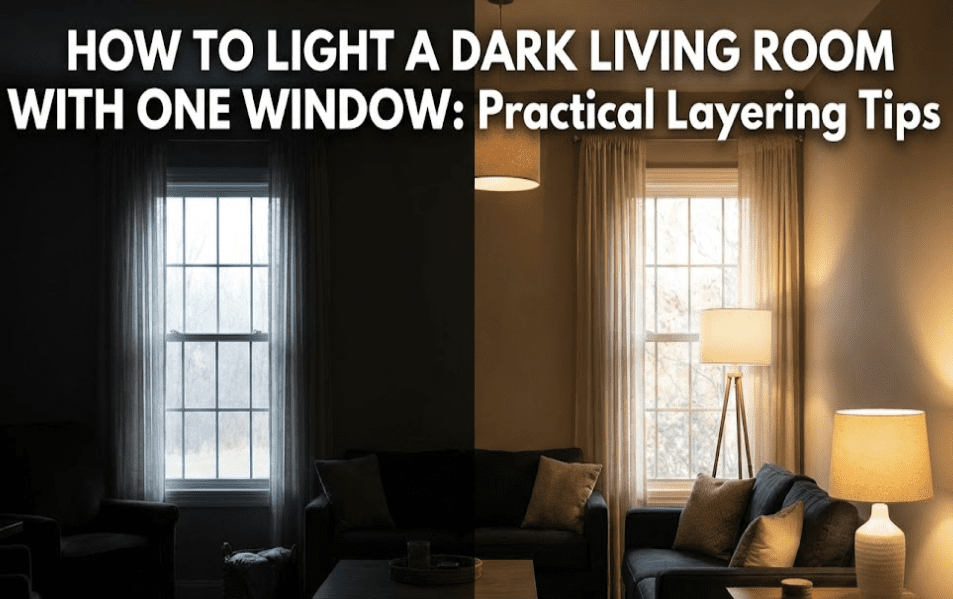
Why a Dark Living Room Feels Dim in the First Place
Before adding fixtures, it helps to understand where light is failing. In a one-window living room, there is usually a clear “bright side” near the window and a “shadow side” that never fully catches up.
The darkest areas are often:
- The far corners opposite the window
- Behind sofas or large sectionals
- Under shelves, beams, or low ceiling edges
- Walls painted deeper colors or covered with heavy art
If your lighting is mostly overhead, the ceiling may look bright while these zones stay dim. This imbalance is usually why the room still feels flat.
How to Brighten a Dark Living Room Using the 3 Heights Rule
One of the most effective ways to brighten a dark living room is to add light at three distinct heights. This spreads brightness evenly and removes harsh contrast.
- Ceiling level: General ambient light from a ceiling fixture or recessed lights
- Eye level: Table lamps or wall lights for comfort and visibility
- Low level: Floor, shelf, or accent lighting to soften corners and pathways
You do not need many fixtures. You need intentional placement so the room stops looking like it has one bright spot and everything else fading away.
How to Brighten a Dark Living Room by Lighting the Far Corner
If you do only one thing, focus on the far corner opposite the window. This corner controls how deep and open the room feels. When it stays dark, the entire space feels smaller.
Corner options that work in real homes:
- A tall floor lamp with a shade that throws light upward and outward
- A plug-in wall sconce aimed to wash the wall
- An uplight tucked behind a plant or next to a bookcase
Aim the light toward the wall and ceiling. When those surfaces brighten, the whole room feels more open without glare.
Why Two Lamps Work Better Than One Bright Ceiling Light
Many homeowners try to brighten a dark living room with a single high-lumen ceiling bulb. This often creates glare while shadows remain.
A simple lamp placement plan:
- One lamp near the main seating area
- One lamp on the shadow side of the room
If you have a sectional, placing a lamp behind or beside the longer side helps break up the “dark wall” effect.
How to Brighten a Dark Living Room by Washing the Walls
Lighting wall surfaces is often more effective than blasting the center of the ceiling. Bright walls reflect light back into the room and reduce harsh contrast.
Ways to create wall washing without remodeling:
- Sconces that direct light up and down
- A lamp aimed toward a lighter wall
- Picture lights or shelf lights on a feature wall
Even one washed wall on the darkest side can noticeably change how the room feels at night.
How to Brighten a Dark Living Room With the Right Bulbs
With one window, daylight is already uneven. At night, mismatched bulbs exaggerate the problem.
Practical bulb targets:
- Color temperature: 2700K–3000K
- Brightness: Moderate bulbs across multiple fixtures
- Consistency: Same Kelvin rating throughout the room
Matching bulb color helps the space feel cohesive rather than patchy.
Control and Dimmers Make Dark Rooms Easier to Live In
A dark living room often needs different moods: bright for cleaning, soft for evenings, and low for TV.
Simple control upgrades:
- Add a dimmer to the ceiling fixture
- Use smart plugs so lamps turn on together
- Keep one low-level lamp on a schedule
When lighting is easy to adjust, layered lighting becomes part of daily life.
Small Layout Changes That Help Brighten a Dark Living Room
Lighting works best when furniture does not block it. Small layout shifts can make a big difference.
- Pull sofas a few inches off walls
- Avoid tall bookcases on the window wall
- Use lighter textiles on the shadow side
These changes reduce contrast and help your existing lighting work harder.
A Simple Plan to Brighten a Dark Living Room Tonight
- Light the far corner opposite the window
- Add a second lamp on the shadow side
- Use consistent 2700K–3000K bulbs
- Dim the ceiling light and let lamps lead
- Keep one low-level light for pathways
A living room with one window can still feel open, balanced, and welcoming when lighting is layered intentionally.
Choosing Fixtures That Support a Brighter Living Room
Once your layers are working, ceiling fixtures no longer need to do all the work. They support the room instead of overpowering it. If you are considering chandeliers, ceiling lights, or complementary pieces to match your lamp setup, you can browse home lighting at Seus Lighting. Thoughtful fixture choices paired with lamps and wall lighting can transform even a dark living room into a comfortable, usable space.
